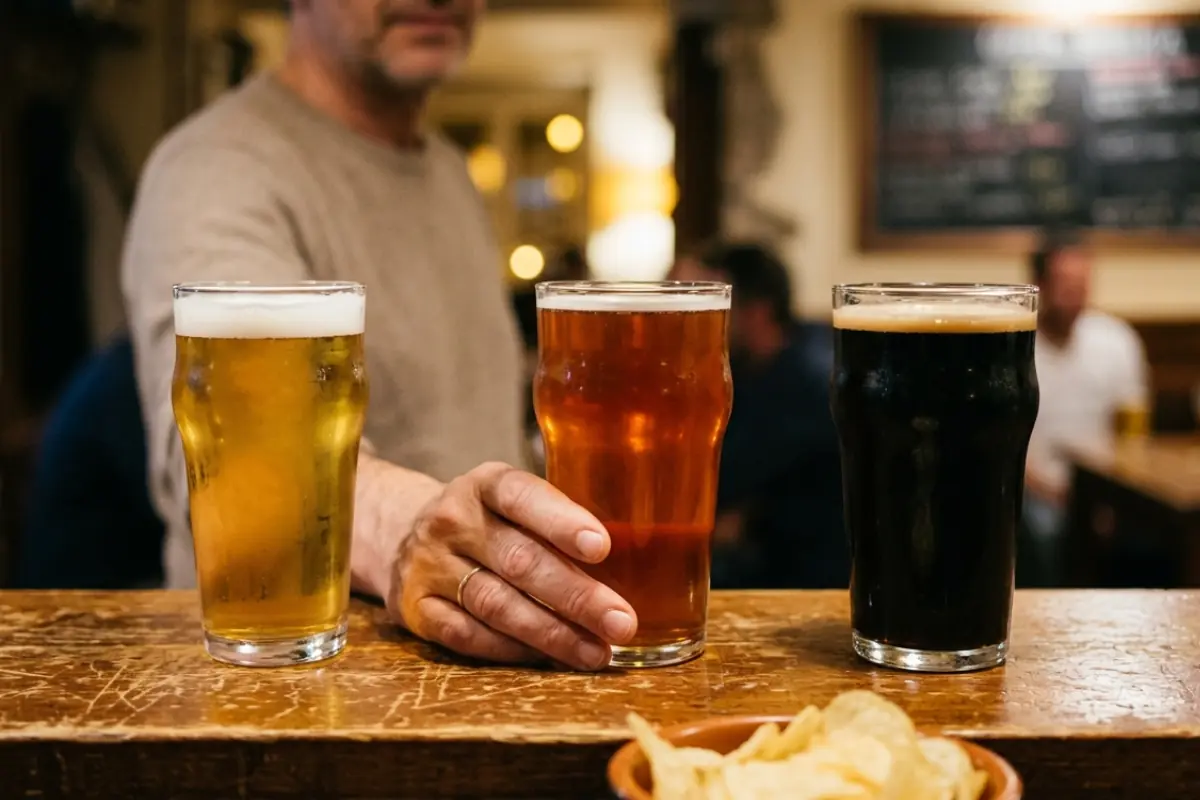
You walk into a pub in Italy, open the menu, and find three words: bionda, rossa, scura. Blonde, red, dark. No styles, no ABV, no description. Just three colors. The bartender is waiting, you pick whichever sounds least risky, and you hope for the best.
It happens all over the country, and nobody ever stops to explain what those words actually mean. The short answer: much less than you’d think. The long answer is this article.
Contents
The words the law regulates aren’t the ones you’d expect
Here’s the part that surprises almost everyone: bionda, rossa and scura are not legal categories. They appear nowhere in Italian beer law.
The law that governs beer in Italy is Law 1354 of 1962, amended several times since. What it classifies is not color but degrees Plato: the amount of sugar in the wort before fermentation begins. From that single measure come the five legal sales denominations: birra analcolica (alcohol-free), birra leggera or light, birra, birra speciale, and birra doppio malto.
So the law concerns itself with how strong a beer is, not with how it tastes. On everything else, hops, fermentation method, character, it says nothing. Styles like pils, lager, rossa, ale or bitter aren’t defined by any regulation. They exist as brewing tradition and commercial convention, not as protected categories.
Put plainly: the words that describe flavor are policed by nobody, and the only words that are regulated exist to determine how much tax the producer pays.
Bionda: the vaguest word on the menu
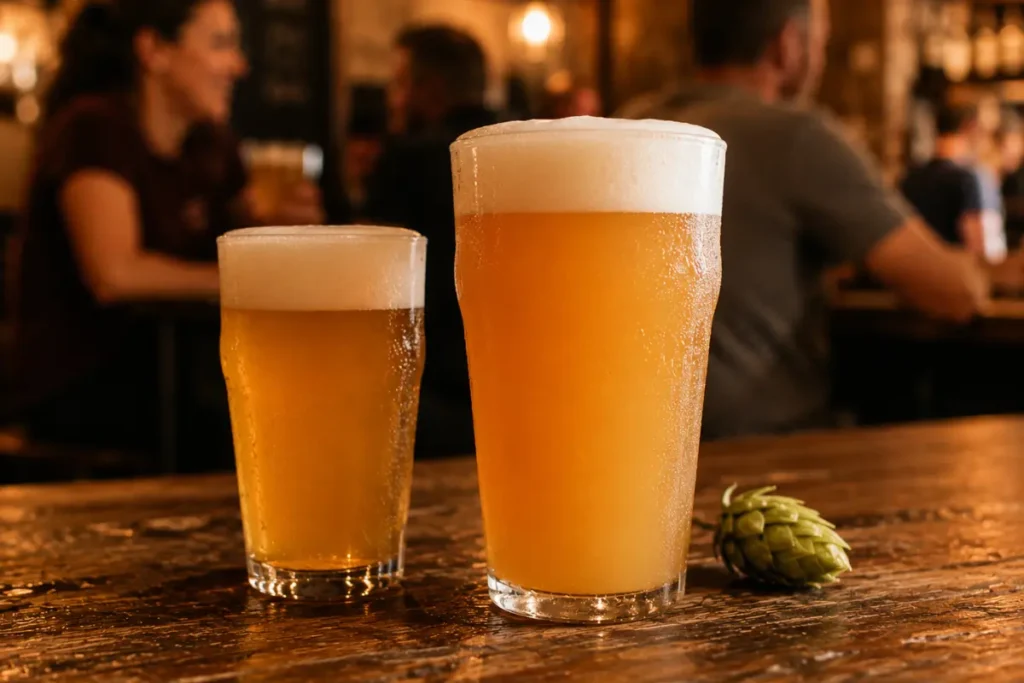
“Bionda” means a pale beer, anywhere from straw yellow to gold. That’s it. That’s the whole message.
Under that one word you might find a Bavarian Helles, soft and malty, hops sitting quietly in the background. Or a pils, which is its opposite in terms of balance: dry bitterness, crisp finish, hops front and center. Two pale beers, two completely different experiences, as we covered in our piece on the difference between lager and pilsner.
And it doesn’t stop there. A German Weizen also falls within the blonde range, but it’s cloudy, with those banana and clove notes that come from the yeast and blindside anyone expecting something neutral. A Golden Ale is bionda. A 4% Session IPA is bionda, and it’s hoppy. A Belgian Golden Strong Ale is bionda and can push past 8%.
Same word, five beers with almost nothing in common. And one of them sends you home in a taxi.
Rossa: the most misunderstood of the three
If “bionda” is vague, “rossa” is worse. It’s the word that covers the widest gap between what you picture and what lands in front of you.
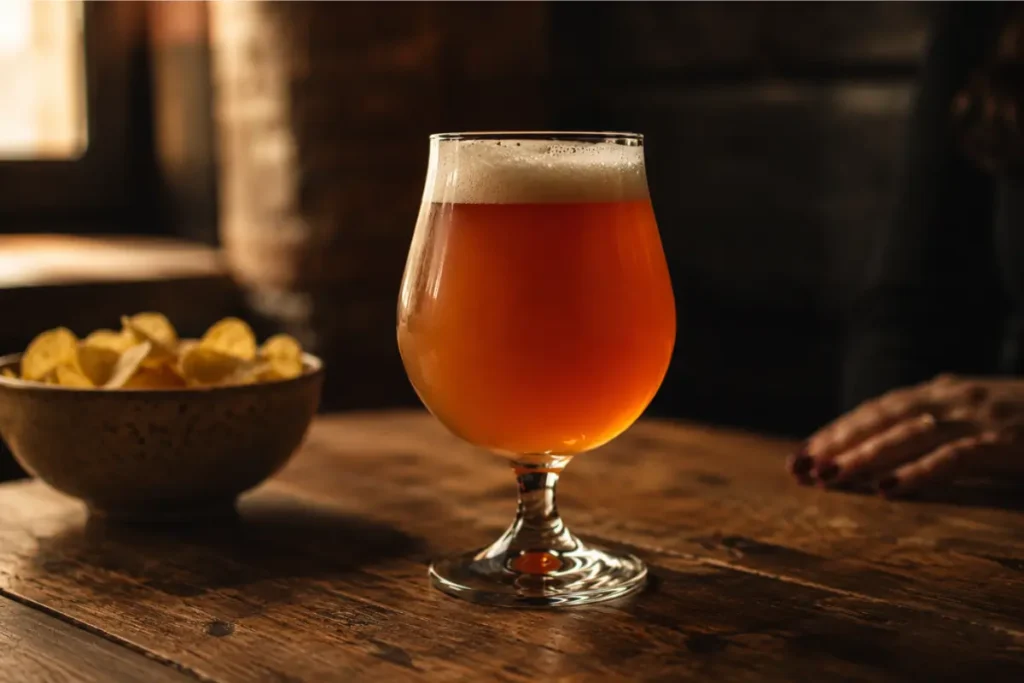
In Italian pub shorthand, “rossa” means a color running from amber to copper. But underneath that color sit beers from opposite worlds.
A Märzen is amber. It’s a lager, bottom-fermented: clean, malty, dry on the finish, usually between 5 and 6%. The kind of beer you drink slowly without thinking too hard about it.
A Belgian Dubbel is also dark amber. But it’s a top-fermented ale, with notes of dried fruit, plum, dark caramel and candi sugar, and it often clears 7%. Not a beer to drink absent-mindedly.
Same color on the menu. A world apart in the glass, in body and in alcohol. And the menu tells you none of it.
Worth adding: “rossa” is the only one of the three words that has picked up a certain prestige in Italy. Many people instinctively associate it with something more crafted, more carefully made than a bionda. There’s no basis for that. An industrial rossa is still an industrial beer, and a well-made craft bionda is technically far harder to brew. We went into this in more depth in craft beer vs industrial beer.
Scura: where the word breaks down completely
“Scura” suggests something heavy, sweet, strong and demanding. Most of the time, that’s simply wrong.
A Dunkel is a dark Bavarian lager. Bottom-fermented, notes of toasted bread and light caramel, often under 5.5%. Dark and easy-drinking, two things many people assume can’t go together.
A Schwarzbier is darker still, nearly black, and it’s still a light, clean lager.
A Stout or a Porter bring coffee, chocolate and serious roast, with a very different body and structure.
But the example that settles the argument came up while we were writing about IPA substyles: the Black IPA. The color is dark, close to a stout. The nose and the palate are pure IPA: resinous, citrusy hops up front, with a roasted base that adds complexity without taking over. People meeting it for the first time expect something sweet and heavy and get a hoppy, bitter beer instead.
Order a “scura” blind and get that one, and the word on the menu has helped you exactly zero.
The fourth word: doppio malto
There’s one more term on the same menus that causes just as much confusion: doppio malto, literally “double malt.”
It does not mean the beer contains twice the malt. It doesn’t mean it’s more crafted, more carefully made, or better. It’s simply the legal name for the fifth category in the Italian classification: a beer with a Plato degree of 14.5 or higher.
Translated: it tells you that beer is stronger than average, and that the producer pays more excise duty on it. Nothing else. It doesn’t tell you whether it’s a lager or an ale, sweet or bitter, pale or dark.
It’s the only one of the four words on the menu with a precise, verifiable meaning, and it’s also the one almost nobody reads correctly.
What these words actually tell you
Let’s be honest about it. Bionda, rossa and scura give you exactly one real piece of information: how roasted the malt is.
Pale malts make pale beers. More roasted malts make amber beers. Heavily roasted malts make dark beers. That’s the whole thing, and it’s true but thin.
What those words don’t tell you:
- whether it’s a lager or an ale, bottom or top fermented
- how strong it is
- how bitter it is
- whether it’s hop-forward or malt-forward
- whether it’s sweet or dry
- whether it’s craft or industrial
Six out of six missing. Which is why picking a beer by its color is a bit like picking a wine by the weight of the bottle.
What to ask at the bar instead
Here’s the useful part. Three questions, none of which require you to know anything about beer, that will tell you more than any color-coded menu.
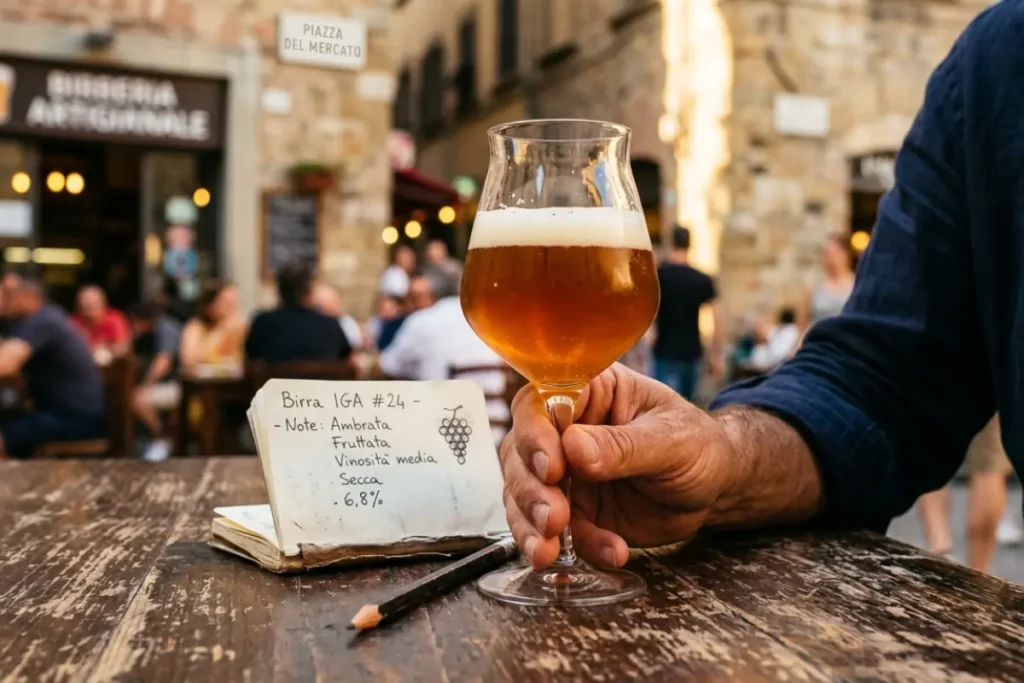
“Che stile è?” (What style is it?) The simplest question and the most effective. If the bartender says “it’s a Helles” or “it’s a Dubbel,” you already know more than the color told you. If they don’t know, that’s useful information about the place.
“È amara o maltata?” (Is it bitter or malty?) This one cuts across every style and solves the problem you actually have: figuring out whether you’ll like it. Nobody needs to know what dry hopping is to answer it.
“Quanti gradi ha?” (What’s the ABV?) An obvious question, but a decisive one when you’re about to order a “rossa” that could be a 5% Märzen or a 7.5% Dubbel. It changes how the whole evening goes.
If asking feels awkward, remember that in most Italian craft breweries they’re glad to answer. It’s literally their job, and nearly all of them would rather explain what you’re drinking than serve you something you won’t enjoy.
And if the place has beer on tap, ask for a taste. Nobody takes offense, and it’s the fastest way to understand without any theory at all.
Common questions about Italian beer colors
Are bionda, rossa and scura official categories?
No. They appear nowhere in Italian beer law, which classifies products solely by degrees Plato, meaning the sugar concentration of the wort. Bionda, rossa and scura are commercial conventions that grew up to simplify menus, not technical or protected definitions.
Is a birra rossa stronger than a bionda?
Not necessarily. Color comes from how roasted the malt is, not from alcohol content. There are dark beers under 5% and pale beers over 7%. A Dunkel is dark and light, a Belgian Golden Strong Ale is pale and can top 8%.
What does doppio malto mean?
It’s the Italian legal denomination for a beer with a Plato degree of 14.5 or higher. It indicates a higher sugar concentration in the wort, and therefore usually more alcohol. It does not mean double the malt, and it’s not a quality marker.
Next time you open a menu
You don’t need to memorize beer styles to drink better. You just need to know that those three words on the menu aren’t a description, they’re a shortcut. A useful shortcut for whoever printed the menu, much less so for whoever’s reading it.
Next time you’re at the bar, try one of the three questions. Worst case, you learn something. Best case, you end up with the right beer in front of you instead of the one that looked least risky. And if you get a “rossa” or a “scura” that surprised you, for better or worse, let us know.
Before you go, the takeaways:
- Bionda, rossa and scura are not legal categories: Italian law classifies beer by degrees Plato, meaning alcoholic strength, and says nothing about style
- Color only tells you how roasted the malt is, not whether the beer is bitter, strong, hoppy, top or bottom fermented
- “Rossa” is the most ambiguous word on the menu: it could be a 5% Märzen or a 7.5% Belgian Dubbel, two beers with almost nothing in common
- “Doppio malto” doesn’t mean double malt: it’s just the legal name for the category at 14.5 degrees Plato or above
- Three questions at the bar beat any color-coded menu: what style is it, is it bitter or malty, what’s the ABV