You’re holding a glass that smells of white peach and flowers, with something fruity that faintly recalls wine. It’s effervescent, fresh, easy to drink. And yet it’s not wine. It’s not a fruit beer in the traditional sense either. It’s something more precise and more interesting: an IGA beer, or Italian Grape Ale, a style born in Italy that’s winning over more and more curious drinkers.
In short: IGA is a top-fermented beer style, produced with yeasts that work at higher temperatures like Anglo-Saxon ales, in which grapes or a grape derivative are added during production. It’s not a beer flavoured with fruit syrup, and it’s not an improvised wine-beer hybrid. It’s a codified style, internationally recognised, and it was born in Italy.
In this post you’ll find everything you need to understand IGA beer: how it came about, how it’s made, what it tastes like in the glass, which Italian grape varieties are involved, and where to try it, especially in Friuli and Veneto.
Contents
How IGA beer was born: the story of a uniquely Italian style
2006, a Sardinian brewery and a Cannonau grape reduction
The story begins in Sardinia, in 2006. Brewer Nicola Perra, from Birrificio Barley, has a simple but bold idea: add sapa made from Cannonau grapes to an Imperial Stout, a dark and intense beer. Sapa is a cooked, concentrated grape must, obtained by slowly reducing fresh grape juice over heat: an ingredient with ancient roots in Mediterranean farming tradition. The beer is called BB10, and on the nose it brings caramel, cocoa, plum and sour cherry, with a soft winey base that had no precedent in the Italian craft beer world.
It wasn’t a casual experiment. Sardinia has a centuries-old winemaking tradition, and Perra was immersed in that culture. The intuition was to bring together two worlds that nobody had yet approached in a systematic way: craft breweries and Italian vineyards.
From craft brewery to international recognition
Between 2008 and 2012, Barley releases more beers that deepen this direction, and other Italian breweries begin to follow, each with their own grape variety, their own technique, their own territory. The style takes shape and coherence. In 2014 it is presented to the BJCP (Beer Judge Certification Program), the international organisation that classifies and certifies beer styles from around the world. A year later, in 2015, IGA officially enters the BJCP guidelines: it’s the first style strongly associated with Italy and its winemaking tradition to receive this recognition.
Italy’s Treccani encyclopedia defines it precisely: a top-fermented beer containing a percentage of grapes, grape must, or cooked must. Few words, but enough to understand what we’re talking about.
How grapes get into a beer (without it becoming a wine)
Must, pomace, maceration: the forms grape takes in a brewery
Grapes can enter an IGA in very different forms, and each one brings something specific to the glass. The most common approach is adding fresh grape must: the juice obtained from pressing is added in a variable proportion relative to the cereal base. Another route is pomace, the solid residue from pressing, including skins and seeds, which are rich in tannins, colour and aromas. Some brewers use whole grapes, others cooked must or sapa, which gives a more intense and darker contribution, similar to what Barley first explored.
Maceration is the technique by which grapes or pomace remain in contact with the wort or beer for a period of time, slowly extracting aromas, colour and structure. It’s the same logic used in the production of red wine, applied in a completely different context.
The timing of the addition changes everything
If grapes are added during the boil, at high temperatures, you get more integration, more body, and a more stable beer. If added during primary fermentation, the typical aromas of the grape are better preserved and interact directly with the yeast. If the addition happens during conditioning, the character of the grape emerges in a more delicate and controlled way, almost whispered.
A brewer who wants a fresh, aromatic, easy-drinking IGA uses different strategies from one seeking a structured, winey, contemplative beer. It’s exactly this freedom that makes the style so varied and hard to pin down rigidly.
What you taste when you drink an Italian Grape Ale: aroma and structure
The typical profile: fruity, winey, fresh
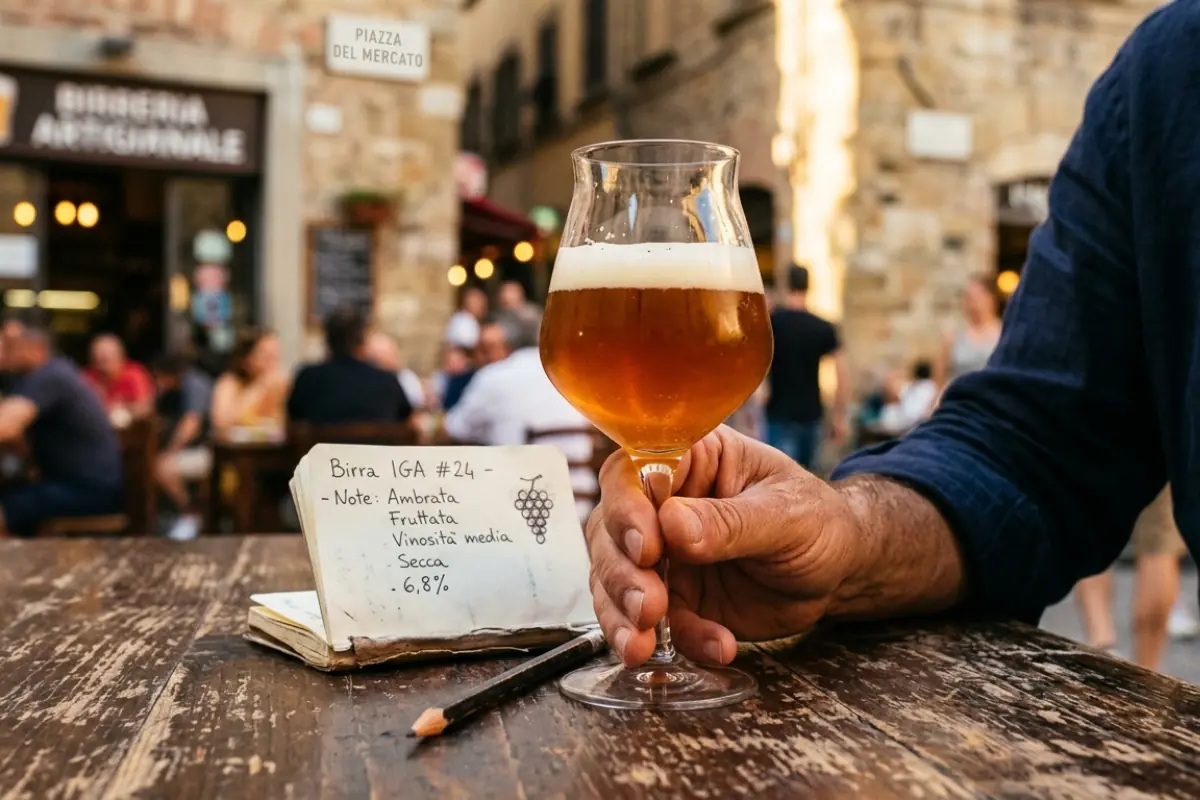
In the glass, an IGA almost always brings a fruity profile with an underlying winey note. The type of fruit depends on the grape: with white varieties you often find peach, apricot, tropical fruit, sometimes floral or almond hints. With red varieties come cherry, strawberry, berries, sometimes morello cherry. The body is usually light to medium, the finish often dry, with a freshness that makes the beer very easy to drink.
Acidity is a frequent characteristic in IGAs: present, pleasant, sometimes lively, never aggressive. It gives freshness and supports the fruity component without overwhelming it. The profile changes enormously depending on the grape used, which makes every IGA a discovery in its own right.
IGA, sour and fruit beers: three different things
Many people confuse IGA beer with other styles that share some characteristics. Sour beers, for example, focus on acidity as the central element: often lactic, meaning yogurt-like, or acetic, closer to vinegar, sometimes with very pronounced wild notes. In an IGA, acidity is present, but it supports the fruit without dominating. The difference isn’t subtle: a sour hits you with acidity from the first sip, an IGA wraps you in fruit and winey character.
Traditional fruit beers, on the other hand, often have a fruit presence that feels direct, sweet and almost “added”. In IGAs the fruit is winey and fermentative, with a complexity that recalls wine more than syrup. IGA sits between these two worlds, and that’s exactly its appeal: it resists easy definition, but you recognise it immediately.
The Italian grape varieties that go into beer
White grape varieties: freshness and floral notes
Moscato, Malvasia, Vermentino, Chardonnay, Pinot Bianco: these varieties bring clear aromas of peach, apricot, tropical fruit and sometimes floral or almond hints to IGAs. Beers made with white grapes range in colour from straw to golden and have a fresh, light, immediate character.
We tried the Ribò from Gjulia in person. It’s made with Ribolla Gialla, a grape variety native to Friuli, and in the glass you really taste the grape: not as an added note, but as the character of the beer itself. It’s a style that works very well for people who usually prefer wine, and Ribolla Gialla is exactly the kind of grape that builds that bridge. Gjulia also produces Grecale, made with Picolit must: it’s on our list, and we’re curious to discover what such a rare grape variety can add to the glass.
Red grape varieties: fruit, colour and structure
Cannonau, Sangiovese, Barbera, Primitivo, Pinot Nero: these varieties bring cherry, strawberry, berries and morello cherry, sometimes darker and winier sensations. The colour changes significantly: copper and ruby tones, through to dark brown in the more intense versions. The body is more present, the finish more structured.
Italy has a variety of native grape varieties that is among the richest in Europe. For brewers who want to work with grape pomace or fresh must, this is a raw material heritage unlike anywhere else in the world.
IGA beer in Friuli and Veneto: Picolit, Glera and the breweries of the Northeast
Friuli: a land of white wines that find their way into beer
Friuli Venezia Giulia is one of Italy’s most important wine regions, with native varieties like Friulano, Ribolla Gialla and Picolit that have a centuries-long history. The Friulian craft brewing scene includes dozens of active breweries, many of which have started direct collaborations with local wine growers: a dialogue between two worlds that would have been hard to imagine twenty years ago. It was inevitable, sooner or later, that these paths would meet in the IGA.
Friulian IGAs deserve a closer look: over the coming months we’ll be covering them through dedicated brewery and beer reviews, based on visits and tastings we do in person.
Where to find IGA beer in Treviso and the Veneto hills
Glera is the grape variety behind Prosecco, grown in the hills between Treviso and Belluno, in the areas that now carry the UNESCO designation of the Conegliano Valdobbiadene Prosecco Hills. On the nose it brings green apple, pear, white flowers and a lively freshness that makes it immediately recognisable. Used in an IGA, it contributes with subtlety: it doesn’t turn the beer into Prosecco, but adds an elegant, fragrant character that integrates well with the rest of the beer.
In the Treviso area, the proximity between vineyards and craft breweries has created fertile ground for collaborations between brewers and wine growers. Birrificio 17, based in Castello di Godego in the province of Treviso, produces Merla: an IGA with Merlot grapes, red fruits, medium body, winey finish. We haven’t tried it in person yet, but it’s on our list: the territory feels right, and the choice of grape variety intrigues us. Brewery taprooms in the Northeast are often just a few kilometres from the vineyards that supply the grapes. If you want to know more about Italian craft beer, read our article Craft beer in Italy: where to start.
How to drink it, pair it and where to find it
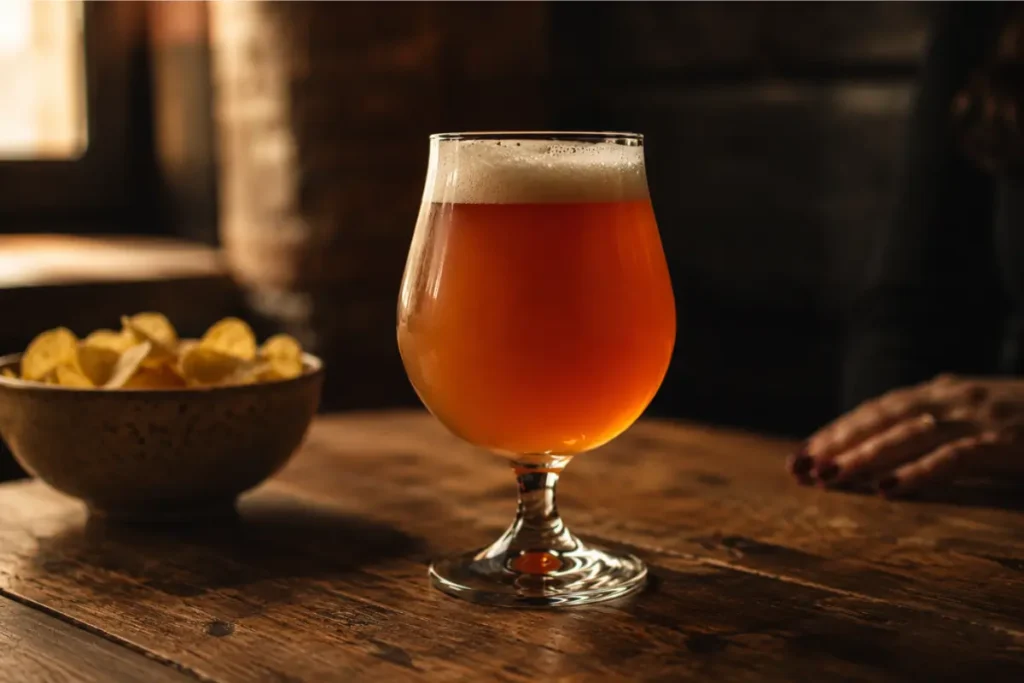
Brewers suggest serving it around 8-12°C, depending on the structure of the beer: slightly higher than an industrial lager. This allows the aromas to express themselves fully, especially in versions made with aromatic grape varieties. The recommended glass is a tulip or a wine-style goblet, which concentrates the aromas and works well for both lighter white-grape versions and more structured red-grape ones.
For food pairing, the simplest rule is to follow the grape variety. An IGA with white grapes works well with fresh cheeses, fish carpaccio, light fried food, and dishes with citrus or fresh herbs. Look for the contrast between the beer’s acidity and the richness of the food: the result is almost always pleasant. An IGA with red grapes, on the other hand, holds up better alongside cured meats like prosciutto di Sauris or sopressa veneta, as well as roasted meats and semi-hard cheeses. The winier, more structured character of these versions balances intense flavours without being overwhelmed.
The best place to try a Northeast Italy IGA is almost always the taproom of the brewery that makes it. Many IGAs are seasonal or limited productions, tied to the grape harvest: hard to find anywhere else. When you visit a brewery in Friuli or Veneto, always ask if they have an Italian Grape Ale in production or in season: it often doesn’t appear on the menu, but it’s there, in a keg, waiting for whoever knows to ask.
Common questions about IGA beer
What is IGA beer?
IGA stands for Italian Grape Ale: a top-fermented beer style that includes grapes or a grape derivative among its ingredients. It’s not a fruit beer, and it’s not an improvised hybrid: it’s a codified style, internationally recognised by the BJCP since 2015. It was born in Italy, and Northeast Italy is one of the areas where some of the most interesting versions are produced.
Is IGA suitable for people who usually drink wine?
Yes, often more than you’d expect. Versions made with white grape varieties, like Ribolla Gialla, are fresh and fruity, with a character that speaks to wine drinkers too. Anyone who isn’t used to the bitterness of heavily hopped beers often finds in IGA a gentle entry point into the world of craft beer.
How do you pair IGA with food?
Follow the grape variety. With white grapes: fresh cheeses, fish, light fried food. With red grapes: cured meats, roasted meats, semi-hard cheeses. The beer’s acidity works well in contrast with the richness of the food.
Where can I find a Northeast Italy IGA?
The best place is the taproom of the brewery that makes it. Many IGAs are seasonal, tied to the grape harvest, and hard to find elsewhere. When you visit a brewery in Friuli or Veneto, always ask: it often doesn’t appear on the menu, but it’s there.
Are IGA and sour beer the same thing?
No. A sour beer focuses on acidity as its dominant element, sharp and present from the first sip. In an IGA, acidity is there, but stays in the background, supporting the fruit and winey character. They’re very different experiences in the glass.
Have you already tried an IGA made with grapes from your area? Every season breweries come out with something new, and it’s always worth asking. Let us know: write to us at hello@beersandtips.it.
Before you go, the takeaways:
- IGA is a style born in Italy in 2006 and internationally recognised in 2015: one of the few certified marks of originality in Italian craft brewing.
- The character in the glass depends on the grape: white varieties lean toward freshness and floral aromas, red varieties toward fruit and structure.
- It’s not a style just for beer enthusiasts: wine lovers, especially fans of fresh whites, will find a natural meeting point in IGA.
- In Northeast Italy, the variety of native grape varieties, from Ribolla Gialla to Glera, is a unique resource for breweries building IGAs with a true sense of place.
- The best IGAs are often not found in bottle shops: look for them in brewery taprooms, especially during the seasons when the grapes are fresh.