Last Updated on 11 August, 2026
You’re at the bar, you know you want something cold and pale, and you tell the bartender: “A lager, please.” They look at you and ask: “Czech or German?” You smile, nod like you understood, and think to yourself: wait, isn’t that the same thing? Don’t worry, this is one of the questions we hear most often too. Is pilsner a lager? Yes, it is. But understanding why, and especially what that actually means in the glass, is what turns a random sip into a real experience. The difference between lager and pilsner isn’t a rivalry between two beers: it’s the distance between an entire category and one of its most famous, most imitated styles in the world. Let’s start from the beginning.
Contents
Lager isn’t a beer: it’s an entire family
When people say “lager,” they’re not naming one specific beer. They’re describing a brewing method, a way of making beer that covers dozens of different styles: from Bavarian Helles to amber Märzen, from dark Dunkel to golden pilsner. What ties them together is the process.
The process that defines it all: bottom fermentation and cold
A lager is, by definition, a beer made with bottom (or low) fermentation. That means the yeast used, Saccharomyces pastorianus, works at cooler temperatures, roughly between 7 and 12°C, compared to the 15-22°C range typical of ale yeast. If top fermentation is like cooking over high heat, bottom fermentation is slow cooking: more time, more control, fewer fruity aromas, and a cleaner, more precise final profile. The result is a beer where flaws have nowhere to hide, and every ingredient speaks clearly.
That’s exactly why making a good lager is technically harder than it looks. In ales, fruity esters can mask small imperfections. In a lager, every flaw shows: fermentation defects, sulfur notes, sloppy temperature control. Nothing covers them up. Keep that in mind, we’ll come back to it when we talk about craft breweries in the northeast.
Lagering: the maturation that makes the difference
After fermentation, a lager doesn’t go straight into the bottle or the keg. It goes through a stage called lagering, a long maturation at very low temperatures, usually between 0 and 2°C, which in a modern craft brewery typically lasts two to four weeks, sometimes longer for more structured beers. During this stage the beer clears up, the aromas settle, and any rough edges disappear. The result is that clean, round, easy-drinking quality that makes lagers so popular. Every pilsner goes through this process, but not every lager is a pilsner: the family is large, and pilsner is just one of its members, even if it’s the most famous one.
How pilsner was born: Bohemia, 1842, a Bavarian brewer
Pilsner’s history has a precise date, a precise place, and a protagonist with a first and last name. It’s one of the most well-documented origin stories in modern beer history, and it’s worth telling in full.
Josef Groll and the first brew in Plzeň
It’s 1842, in Plzeň, a city in Bohemia that’s now part of the Czech Republic. Local brewers are in crisis: their beers are cloudy, dark, and unreliable in quality. They decide to bring in an outside expert, a Bavarian brewer named Josef Groll. He brings the know-how of low-temperature fermentation, and finds in Plzeň the ingredients that will change everything: a new generation of pale malts, Bavarian lager yeast, and above all, remarkably soft, low-mineral local water.
The result of his first brew is a beer no one had ever seen before: golden, bright, clear as glass. In a historical context where, across early 19th century Central Europe, beer was almost always dark and cloudy, what Groll made was something radically new. That’s the moment the pilsner style is born, and the name comes straight from the city: pilsner literally means “from Pilsen,” the German name for Plzeň.
Why Plzeň and nowhere else
The credit isn’t all Groll’s. Plzeň’s water is naturally very soft, low in calcium and magnesium, and that kind of water lets hops express themselves elegantly without turning harsh or metallic. Combined with Saaz hops, also called Žatec after the Bohemian town where they’re grown, the result was perfect. Saaz is what’s known as a noble hop: aromatic, delicate, with herbal and floral notes, low bitterness, barely aggressive at all. Soft water plus Saaz hops is still the recognizable signature of original Bohemian pilsner today.
Lager vs pilsner: what really changes in the glass
The theory’s clear. Now picture yourself at the bar with two beers in front of you: a generic lager and a craft pilsner. How do you tell them apart?
Color and foam: the first visual clue
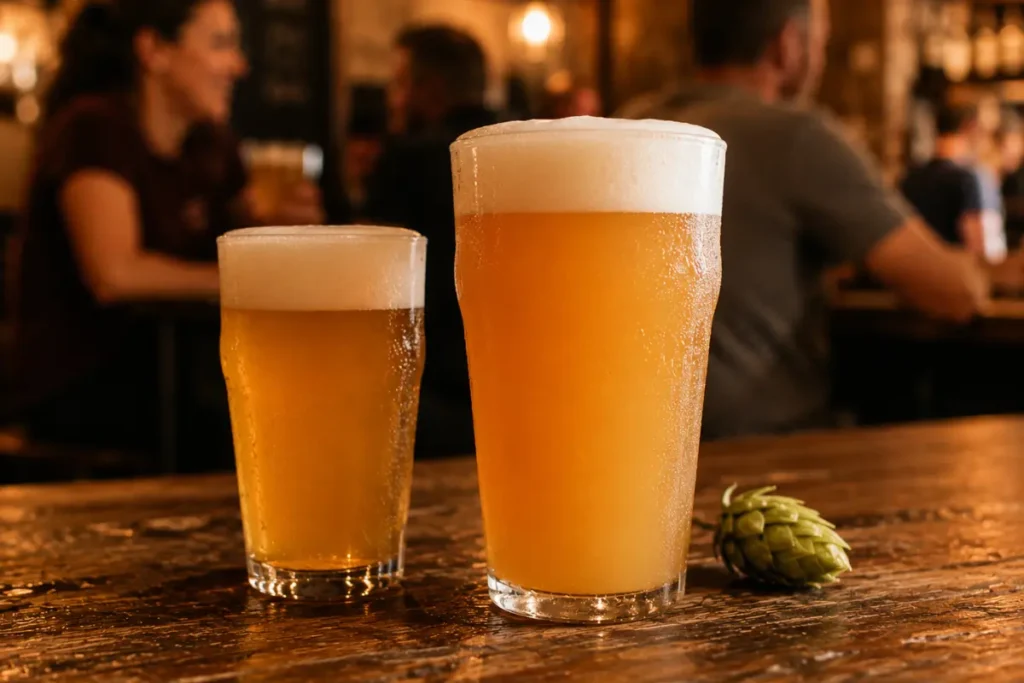
Pilsner has a pale gold to golden color, bright, with a fine, persistent white head that stays in the glass as you drink. Visually it looks similar to other pale lagers, like a Bavarian Helles, but it’s not the same thing. Helles is slightly softer and paler, Märzen is amber, Dunkel is dark. Not every pale beer is a pilsner, and color alone won’t tell you what’s in your glass. Color is just the first clue: it tells you you’re in the right family, not yet the exact style.
The bitterness that sets pils apart from a more neutral lager
This is the most important taste difference between pilsner and lager. Pilsner has a more noticeable, dry, clean bitterness than most other lagers. A generic lager tends to be softer, with malt up front and hops in the background. Pilsner flips that: hops take the lead, the finish is dry, and there’s a light herbal or floral note left on your tongue that’s its signature. If you taste a crisp, dry bitterness in the finish, you’re probably drinking a pils. If the aftertaste is sweet and the hops barely register, it’s likely a different kind of lager.
The ingredients that separate a pils from another lager
To really understand why a pilsner tastes like a pilsner, you have to look inside the fermenter. Hops, malt, and water each play a different role, and in this beer none of them is interchangeable.
Hops: aromatic, and the star of the show in pilsner
In Czech pilsner, Saaz hops bring herbal, floral, and lightly spicy notes you pick up both in the aroma and the aftertaste. In many other lagers, hops are present but understated, almost imperceptible. German pilsner pushes the bitterness even further, coming out drier and sharper than the Czech version, a difference recognizable even to non-experts. Then there’s Italian Pils, a modern variant with no centuries of history behind it but a growing following: it starts from a base similar to the German style and often adds dry hopping, meaning hops added cold after fermentation, which boosts the floral aroma without pushing the bitterness too far. Different styles, all rooted in the same idea.
And when it comes to food, pils doesn’t disappoint: its light body and clean bitterness make it a great match for fresh dishes, from fish to young cheeses, all the way to simple aperitivo snacks. ABV usually sits between 4.5% and 5.5%, which makes it easy to drink without weighing you down.
Malt and water: the quiet support
The malts used in pilsner are very pale and neutral. They give it that golden color without adding excessive sweetness, creating the clean base hops can shine on. Water is an often-overlooked ingredient, but in pilsner it matters just as much as the hops. Soft water, low in calcium and magnesium, brings out the hop aroma and helps create that clean character typical of Czech pilsner. Harder water, rich in minerals, pushes toward different styles, where the malt profile or bitterness develops differently, which is exactly why nowhere else had produced a beer like Groll’s before 1842.
Craft lager and pilsner in Friuli and Veneto: expect to be surprised
Brewing a good pilsner is one of the toughest tests for any brewer. In top-fermented beers, like IPAs or stouts, small flaws can hide behind fruit, resin, and esters. In a bottom-fermented lager, there’s nothing to cover up imperfections. That’s why, when a craft brewery makes a genuinely well-made pilsner, it’s a clear sign of technical skill.
Breweries in Friuli and Veneto worth seeking out
In Friuli Venezia Giulia, start with Birrificio Valscura: their Liquentia is, for us, one of the Italian craft pilsners we’ve enjoyed the most, dry in the finish, with that floral note you want from a good pils. If you want to see how a lager can be excellent without being a pils, head to Antica Contea, in Gorizia near the Slovenian border: their Gorzer is a Helles, the pale Bavarian-style lager, with a character and aroma well above the style’s average. Agribirrificio Àgro, a farm brewery also in Friuli, makes its own Lager too, soft and round, another sign that low fermentation gets taken seriously in this region.
Moving into Veneto, Birrificio La Rü in Cornuda, in the Treviso countryside, is worth a stop: their Nysa is a bottled lager that sits right on the line between a classic pils and an Italian beer, with that floral, herbaceous touch from hops added late in maturation. They also make Ten, a gluten-free Helles, light and easy-drinking: proof that low fermentation and care, even for people with intolerances, can go hand in hand.
Want to see what else Italian craft beer has to offer? Check out our guide to Italian craft beer styles.
How to spot a pilsner on first sip, no sommelier required
You don’t need a tasting course to tell pilsner and lager apart. Just pay attention and have the right glass in front of you.
Look, smell, taste: the sequence that works
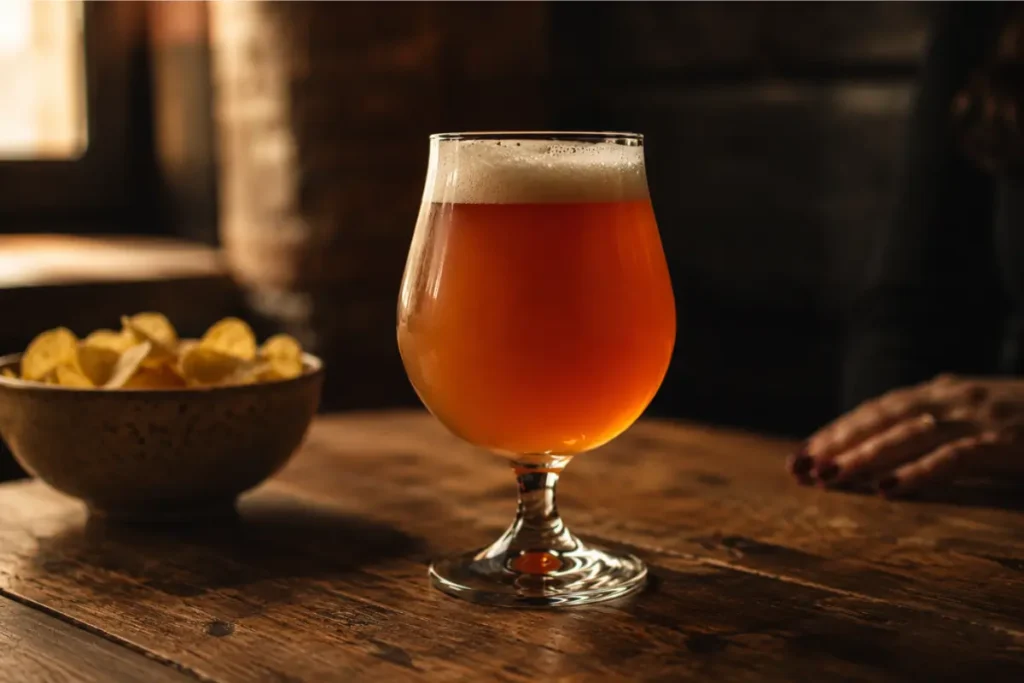
Look: the color is bright golden, the foam is white, dense, and holds up over time. Smell: you’ll pick up herbal and floral notes, something fresh and lightly spiced; the malt is there but not sweet. Taste: the body is light, the bitterness is dry and precise in the finish, residual sweetness is minimal.
Compare it to a more generic lager: you’ll find less bitterness, more softness, hops that are barely there. The difference is immediate once you know what to look for, and it gets even clearer when you go from an industrial lager to a craft pilsner from the region. If you want to dig deeper, we cover it in Craft vs industrial beer: what really changes in the glass.
The quick bar test
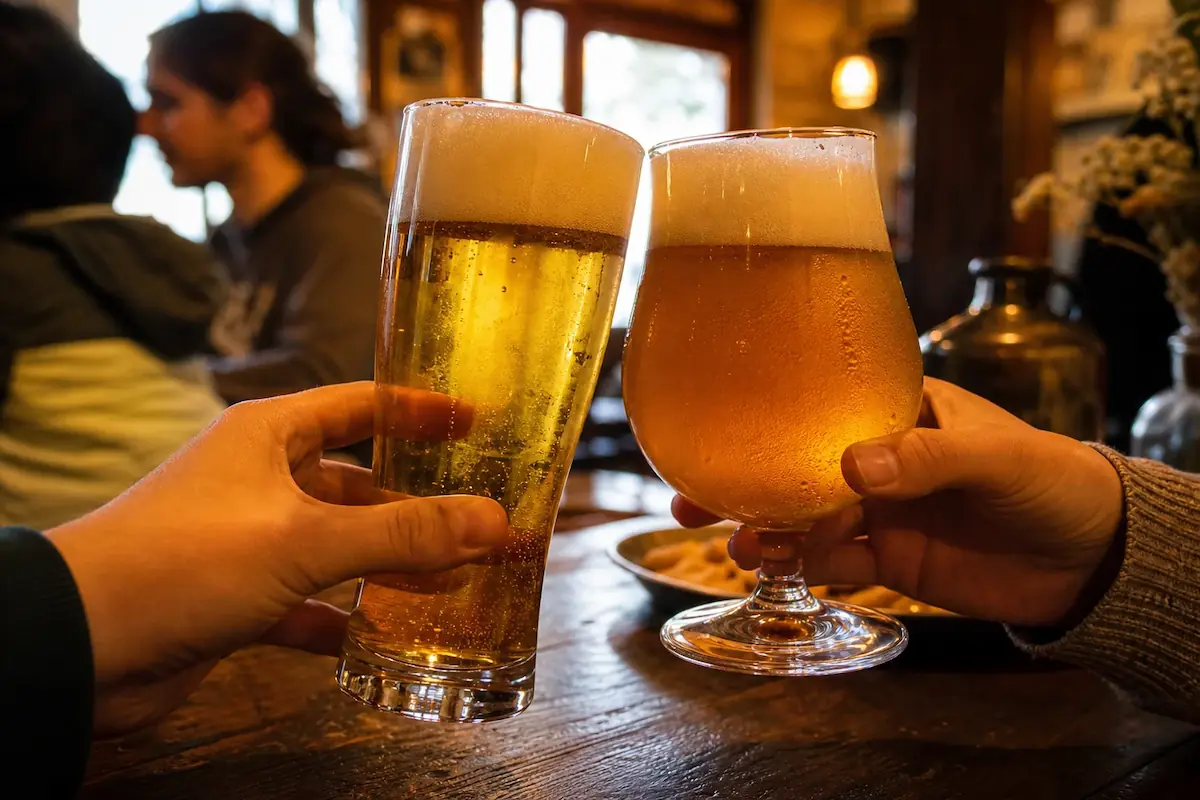
Next time you’re looking at two pale beers, ask which one is the pils and taste them side by side. The difference between pilsner and a more neutral lager becomes crystal clear in the finish: dry, floral bitterness on one side, malty softness on the other. That’s really all it takes. Trying this comparison with a craft pilsner from Friuli or Veneto changes your perspective for good: you realize those “simple” beers actually tell a story of technique, place, and carefully chosen ingredients.
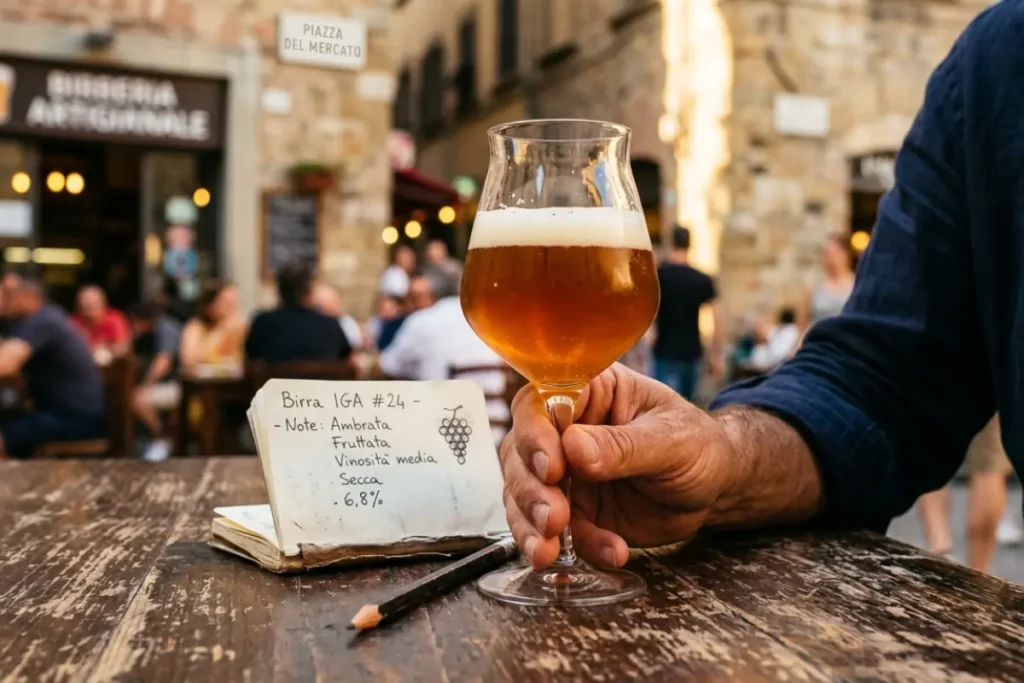
Next time you’re in Friuli or Veneto, look for a local craft pilsner. Sit down, smell it, taste it, and pay attention to the finish. That’s where the difference between lager and pilsner stops being a question and becomes something you can actually enjoy. For practical tips on where to drink in the area, check out our guide, Craft beer in Pordenone: where to drink well.
Common questions about the difference between lager and pilsner
Is pilsner a lager?
Yes. Pilsner is a style within the larger family of bottom-fermented lagers. Not every lager is a pilsner, but every pilsner is a lager.
What’s the taste difference between lager and pilsner?
Pilsner has a drier, more pronounced bitterness, with herbal or floral notes from the hops. A generic lager tends to be softer, with malt upfront and hops barely noticeable.
What sets a Czech pilsner apart from a German one?
The Czech version, born in Plzeň in 1842, is softer and rounder, thanks to the local soft water and Saaz hops. The German version is drier and sharper. Italian Pils often adds dry hopping, which boosts the aromatic notes even further.
Have you already tried an Italian craft pilsner? Which one was your favorite? Let us know, drop us a line at hello@beersandtips.it.
Before you go, the takeaways:
- Every pils is a lager, but not every lager is a pils
- The difference shows up in the finish: dry, floral bitterness in a pils, more malty softness in a generic lager
- Pilsner was born in 1842 in Plzeň, thanks to Bavarian brewer Josef Groll and the local soft water
- Making a good lager or pilsner is a tough test for any brewery, flaws have nowhere to hide
- Friuli and Veneto already have examples that prove it, from Valscura to La Rü