You’re standing at the bar of a craft beer place and you spot “APA” on the chalkboard. The list is full of abbreviations that feel like a small test: IPA you sort of know. Stout too. But APA makes you pause for a second. Is it similar to an IPA? More bitter? Less? You end up ordering the usual thing just to play it safe.
That’s exactly why we decided to write about it. By the end of this post, you’ll know what to expect from a glass of American Pale Ale: how it looks, what you smell, how it feels in your mouth. And most importantly, why it’s often the perfect choice for anyone who wants to explore hoppy craft beer without being overwhelmed by bitterness.
Let’s start from the beginning.
Contents
Where APA beer comes from and why it became a reference style
The story of APA begins in the United States in the 1970s, when a group of passionate brewers started experimenting with hops grown in Oregon and Washington. These were different from European varieties: more resinous, more citrusy, with a distinctive aromatic signature.
The turning point came in 1980, when two California homebrewers, Ken Grossman and Paul Camusi, brewed the first batch of Sierra Nevada Pale Ale in Chico, California. That beer changed the taste of an entire country. It brought the Cascade hop to the foreground, with its grapefruit and citrus aromas, over a soft and balanced malt base. It wasn’t an extreme beer, and that’s exactly why it worked. Intense but approachable, hoppy but never aggressive.
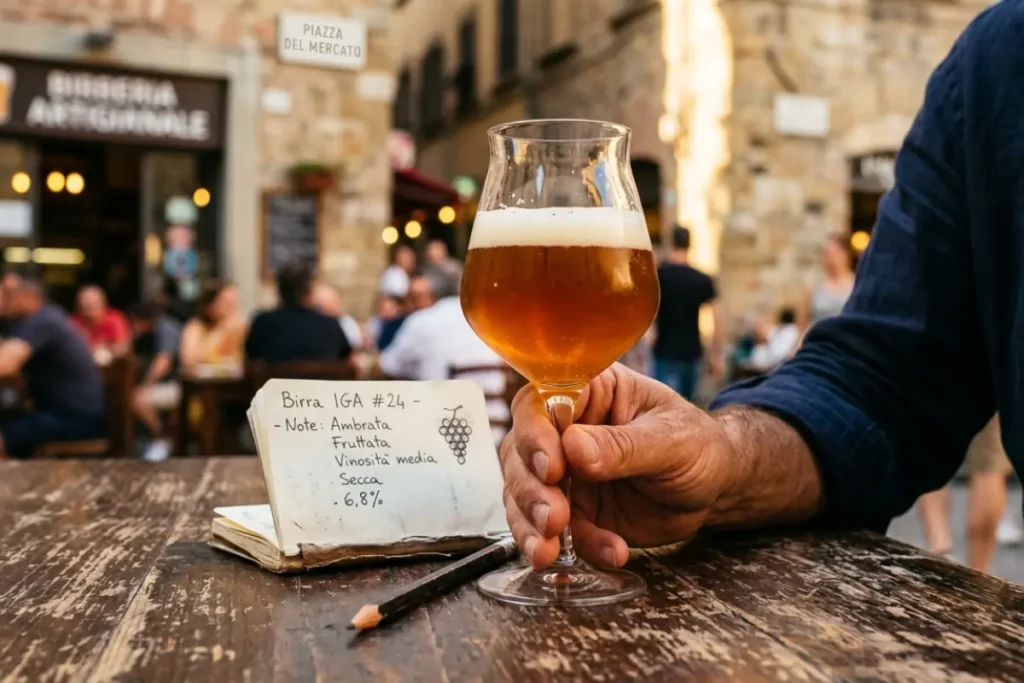
From the mid-2000s onwards, as the Italian craft beer movement began to mature, American Pale Ale found its place here too. Italian brewers adopted the style using imported American hops, often adding their own signature. Today it’s one of the most widespread styles in Italian microbreweries, and frequently the first step into the world of hops for newcomers.
How to recognise an APA in the glass
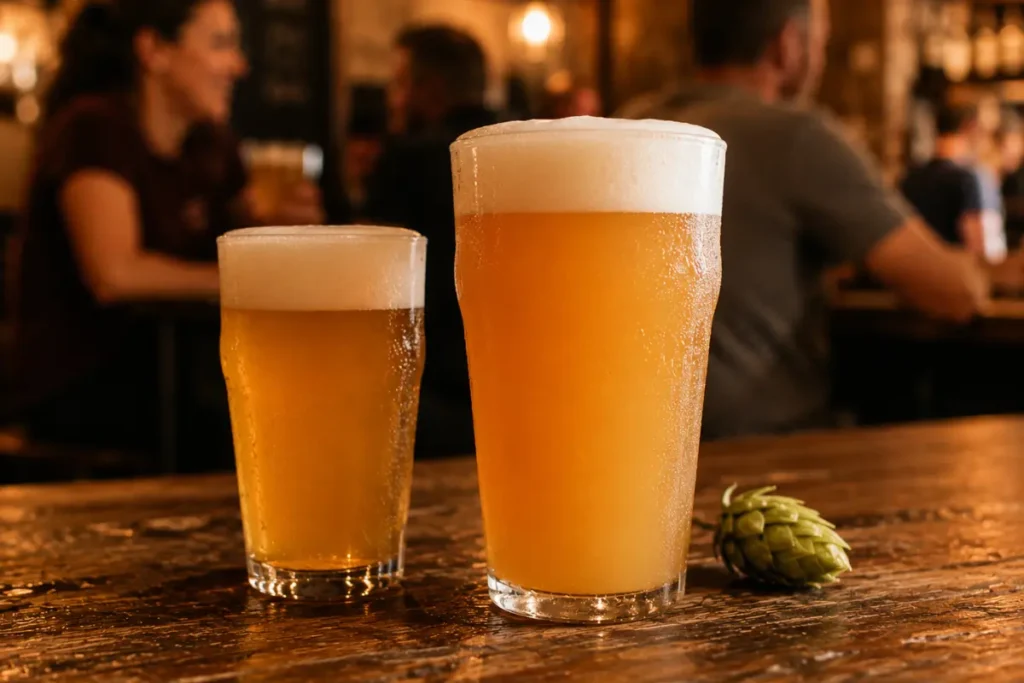
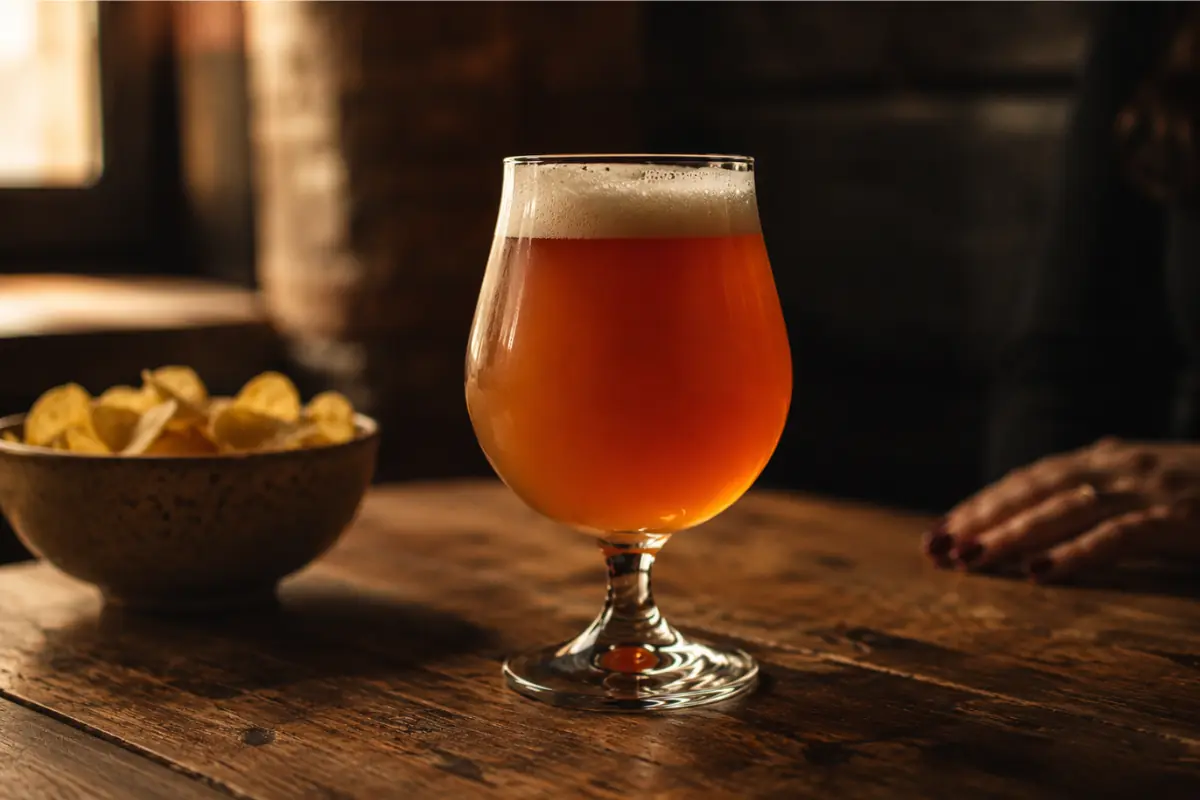
Visually, an American Pale Ale ranges from pale golden to light amber. Think of the colour of acacia honey or an orange in sunlight. The foam is white and generally compact. Some versions are crystal clear, others slightly hazy, depending on the brewing process and the brewer’s choices.
On the nose is where an APA really introduces itself. The stars are American hops, each with its own character. Cascade, the classic of the style, brings grapefruit and orange peel. Centennial adds resin and pine. Citra brings mango, passion fruit, pineapple. Amarillo tends to be more floral and sweet. In most glasses you’ll find a combination of two or three of these varieties working together.
In the mouth, the bitterness is present but balanced: you notice it, but it doesn’t take over. The malt supports the hops with a clean note, sometimes with a light biscuity or caramel hint. The alcohol content usually sits around 5%, making it a medium-intensity beer that drinks well even during a meal. A well-balanced APA is hoppy, fresh, and never aggressive. It doesn’t challenge you, it invites you in.
APA vs IPA: the difference that changes everything
It’s the most common misunderstanding for anyone new to craft beer. APA and IPA look like the same thing with a different letter. In reality the difference isn’t about type, it’s about intensity.
An IPA uses higher quantities of hops, both for bitterness and aroma, and tends to have a higher alcohol content. The overall profile is more assertive, with hops clearly dominating over the malt base. An APA is more harmonious: malt and hops talk to each other in a balanced way, without either one taking over.
Worth mentioning too: the English Pale Ale, the British version of the style, uses local hops that are more herbal and floral, less citrusy and resinous than the American version. Different beers in spirit, not just in ingredients.Many people who try an IPA for the first time find the bitterness too much, and come back to an APA with pleasure, not as a consolation prize. If you want a beer that accompanies food without stealing the show, an APA is almost always the right call. If you want the beer itself to be the experience, with an intense aromatic profile and bold bitterness, then it’s time to move on to an IPA: we covered it in detail in our IPA beer post.
The APAs we’ve tried: three references between Friuli and Veneto
We’ll be honest: we’re not big Ale style fans in general. We tend to reach for IPAs, sours, interesting lagers. But that hasn’t stopped us from finding APAs that genuinely won us over. If anything, it means that when one stands out for us, it really stands out.
The first is the APA from Agribirrificio àgro, in Friuli. We drink it every time we visit the taproom, and it’s one of the reasons we keep going back. It’s a 5% beer, light and easy-drinking, with a balance between sweet and bitter that carries right through to the finish. In the mouth it has a strange sensation in the best sense: rough and soft at the same time. Hard to explain, easy to appreciate.
The second is Bruma, the APA from La Ru Birrificio Artigianale in Bosco Fagarè, in the Treviso area. We already mentioned La Ru in our IPA post, because it’s one of those breweries always worth following. Bruma is a good example of how to make a clean, well-crafted APA, with hints of caramel in both flavour and aroma, true to the style without being academic about it.
The third is the F**k Beer Beep APA from Zuppa di Sasso, another name you’ll recognise if you follow the blog. Old gold colour, hazy, with a white persistent and generous foam. On the nose it’s floral, with clear honey notes. In the mouth there’s a light acidity, a restrained sweetness, and a bitterness that builds toward the finish. Low carbonation, medium body, dry ending with an almost rough texture. A beer that stays with you.
There are other breweries in Friuli and Veneto producing interesting APAs: Borderline Brewery, Basei, 32 Via dei Birrai, Crak Brewery. We’re keeping an eye on them and we’ll write about them once we’ve visited and tasted in person. That’s how we work.
What to pair it with
APA works well at the table for two main reasons. The moderate hop bitterness cuts through fat, making it an ideal companion for fried food, burgers, and juicy meats. The citrusy and resinous notes pair well with spiced and herb-forward flavours, creating a back-and-forth between beer and food that lifts both.
Four pairings that almost always work: burgers with aged cheese, grilled or roasted chicken with herbs or citrus, spiced dishes like tacos or Thai food, fried food and street food. What to avoid: very sweet desserts and delicate dishes that the beer would cover rather than complement.
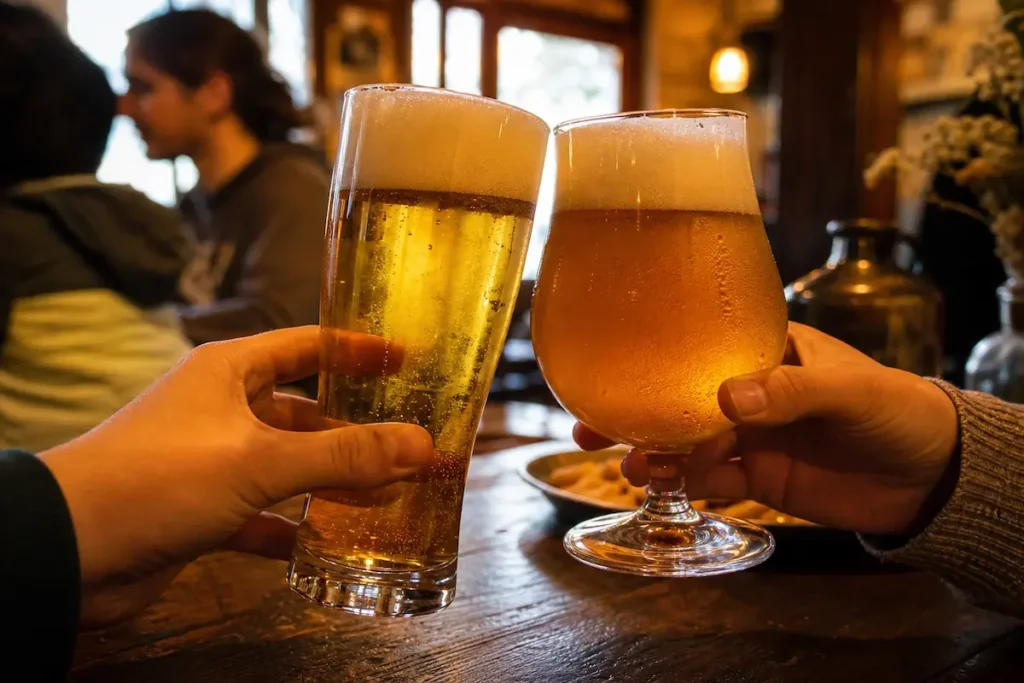
Two practical details that make a real difference. The ideal serving temperature is between 8 and 10 degrees Celsius: too cold and you lose the hop aromas, too warm and the bitterness comes through in an unpleasant way. For glassware, a tulip glass or a classic pint are the right choices.
Common questions about APA beers
What exactly is an APA and how does it differ from other styles?
APA stands for American Pale Ale, a style born in the United States in the 1970s with a strong aromatic identity built around American hops. It stands apart from other hoppy styles because of its balance: less bitter and less alcoholic than an IPA, but more aromatic and characterful than a standard lager.
Is APA a good choice for people who don’t like bitter beer?
Yes, and that’s precisely why it’s often recommended as a first step into hoppy craft beer. The bitterness is there but never aggressive: you feel it, it balances the malt, but it doesn’t dominate. People who find IPA too intense often discover that APA is exactly what they were looking for.
What temperature should an APA be served at?
Between 8 and 10 degrees Celsius. Too cold and you risk losing the hop aromas that make it interesting. Too warm and the bitterness tends to come through in a less pleasant way. A tulip glass or a classic pint helps channel the aromas toward your nose before the beer even reaches your lips.
If you spot an APA on the list, it’s worth the try
Now you know what to expect. A craft APA is golden, hoppy but balanced, with aromas of citrus, resin, or tropical fruit depending on the hops used. It’s less intense than an IPA, more easy-drinking, with a bitterness that’s present but never aggressive.
If you’re in Friuli or Veneto, start with the three we told you about. They’re different beers, but all three give you a clear sense of what a good APA can be in this part of Italy. The rest you discover glass by glass.
Let us know: have you already tried an APA that stuck with you?
Cheers!
Before you go, the takeaways:
- An APA is less bitter than an IPA, more balanced, and often the ideal starting point for anyone exploring hoppy beer
- Its aromatic profile depends heavily on the hops used: citrus, resin, or tropical fruit are the most common notes
- Between Friuli and Veneto there are some great breweries interpreting this style with their own personality
- Serving temperature matters: keep it between 8 and 10 degrees Celsius to preserve the aromas
- If you’re not sure what to order and you see an APA on the list, it’s almost always a safe and rewarding choice