Last Updated on 19 June, 2026
The first time, we weren’t in Milan, or in some bar packed with taps. We were at Valscura, in Sarone di Caneva, with a few beers in front of us and a lot of curiosity. That’s where it all started. But if we walked into a bar today with twenty taps and a bartender waiting, we’d know exactly what to do. Not because we became experts, but because we figured out that craft beer in Italy isn’t a maze: it’s a map. Once you know how to read it, every bar becomes an opportunity.
That’s exactly why we wrote this guide. Not for people who want to become competition judges, but for anyone who wants to enjoy a good pint with a little more confidence. You’ll find the numbers behind the industry, a geographic map of breweries worth knowing, what makes Italian beer unique, and how to start exploring it, at your own pace, without feeling out of your depth.
Contents
Over 1,300 breweries: a sector that keeps surprising
In 2015 there were 649 breweries in Italy. By 2022 there were already 1,326, according to the Unionbirrai/OBiArt 2022 Report (source: the CCIAA business registry): a 104% jump in just seven years, growth that did not stop even during the pandemic. Employment rose alongside it, reaching 9,612 direct workers.
Of those breweries, 290 are agricultural, now 22% of the total: producers that grow part of their own raw materials, the barley and hops that end up in your glass. It is the segment that has grown the most in recent years, and it says a lot about where Italian craft beer is heading.
Total output from craft microbreweries tops 48 million liters a year. Still small numbers next to industrial beer, but enough to explain why even supermarkets have started making shelf space for craft labels.
But what does “craft” actually mean? Since 2016, Italy has had a precise legal definition (Law 154/2016, Art. 35): to carry the label, a beer cannot be pasteurised or microfiltered, and must come from an independent brewery producing under 200,000 hectolitres a year. In practice: no industrial treatment that would flatten the character, and no ties to the big groups. That’s the line, at least on paper.
International recognition confirms that quality has grown along with the numbers. The Brewer of the Year title went to Agostino Arioli of Birrificio Italiano, a historic name marking its thirtieth anniversary and still shaping European standards. That is not a category medal: it is a comparison with the best.
What we’re drinking now: from Italian Pilsner to lighter beers (NoLo)
The Italian craft beer scene is going through a phase of consolidation. Breweries are less drawn to the extreme experiments of past years and more focused on quality, drinkability, and a sense of place. It is a maturity you can taste in the glass. And yet creativity has not stopped: in 2025 alone, according to the Whatabeer database, 242 Italian producers launched at least one new beer.
Three things in particular are worth knowing.
Light beers are the unexpected stars. Beers under 4% alcohol, the NoLo category (from No and Low alcohol), have grown sharply, reaching over 12% of new market releases. This is not a wellness fad: it is the response to a more aware drinker, someone who wants to drink well without necessarily drinking a lot. Unionbirrai even introduced a dedicated category in the Birra dell’Anno 2026 competition. A clear signal.
Lagers are back, and not out of nostalgia. Styles like Pils, Helles, Keller, and true German Lager have passed 27% of new production. And there is one all-Italian substyle worth knowing: the Italian Pilsner, officially recognized internationally in late 2024. It stands out for dry hopping, the addition of hops cold, outside the boil, to lift the aromas without adding bitterness. It earned American recognition before being acknowledged at home. A bit like what often happens with Italian things.
IPAs are evolving. Hoppy beers remain the most produced, close to 36% of the total, but you can feel a shift from the classic American IPAs, stronger and more bitter, toward Session IPAs, lighter and more drinkable. The hops are changing too: alongside the classic Citra and Mosaic, Krush has taken hold, a young variety prized for its tropical profile.
The map of the breweries: from north to south
Italian craft beer doesn’t have a single centre. It has many, each with its own character.
The pull of the Northeast: from 32 Via dei Birrai to Garlatti Costa
Veneto and Friuli Venezia Giulia are the regions to start from, and not just out of affection. With 128 breweries, 9.7% of the national total, Veneto is the second region in Italy by number of breweries, behind only Lombardy (213, 16.1%) and ahead of Piedmont and Tuscany. The Northeast is not a backwater of Italian craft beer: it is one of its centers.
Brewery 32 Via dei Birrai was founded in 2006 in Pederobba, near Treviso, by three friends with different backgrounds: an agronomist, an engineer, and a commercial specialist, united by one idea: to make beer differently. All their beers are unpasteurised, bottle-conditioned, and never standardised. Every batch is a little different from the last, and you can taste it.
In Friuli, Birrificio Agricolo Garlatti Costa in Forgaria nel Friuli tells a different kind of story: family-run, deeply rooted in the land, with barley grown on their own fields and the clean water of the Val d’Arzino as a secret ingredient. Founded in 2012 by Severino Garlatti Costa, it’s now run together with the family, with a weekend taproom set in nature, guided tastings, and an outdoor terrace that’s worth the drive in summer.
Northwest: the pioneer and those who followed
Lombardy has the highest number of active breweries in the country. Birrificio Lambrate in Milan is an institution, known for its bright, citrus-forward IPA. Birrificio Rurale works with traditional techniques and a genuine commitment to sustainability. In Piedmont, one name stands alone: Baladin, founded by Teo Musso in Piozzo, was the pioneer of Italian craft beer. Belgian influences, Italian ingredients, and the ability to bring an entire generation of brewers along for the ride.
Central Italy: experimentation and local identity
Tuscany has a mature agricultural scene, with operations like Brasseria della Fonte in Val d’Orcia, which grows its own barley and hops directly on its land, and Piccolo Birrificio Clandestino in Livorno, more urban and experimental in character. In Lazio and the Marche the scene is younger but growing: breweries like MC77 in the Marche are names to watch in the coming years.
South and islands: the youngest chapter
Birra Salento uses malt grown among olive groves and vineyards, in collaboration with the University of Salento. Malto Lento, in Alto Molise, works with grains recovered from ancient local varieties. Here the product becomes a portrait of the place, with the same evocative power we usually associate with wine. Worth following closely in the years ahead.
What makes the craft beer in Italy unique
From the ground to the glass: the agricultural brewery
The answer lies above all in the relationship with ingredients and with the place where they’re grown.
A concrete example is right here in Friuli, in Polcenigo: Luppolo Verde is an agricultural project founded in 2017 by Federico Comel, an agronomist who chose to grow the hops and other ingredients used in his beers directly on site. The result is an impressively short supply chain, in a setting that couldn’t be more beautiful: Polcenigo is one of Italy’s most beautiful villages, at the foot of the Friulian Dolomites. Visits are by appointment, with a tour through the hop garden and the brewery that ends, as it should, with a tasting.
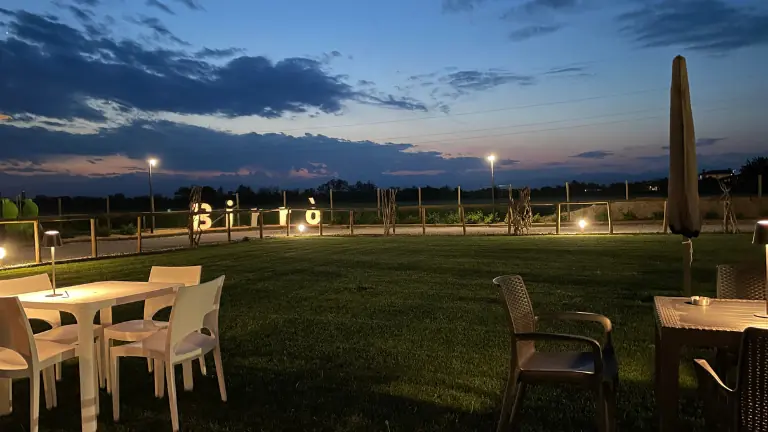
Also in Friuli, in San Lorenzo di Sedegliano, we recently discovered Birrò: a family brewery built quite literally with their own hands, the kiosk, the tasting space, all of it. Their beers are made with barley grown directly by the family, fully local, with a clear philosophy: light, easy-drinking flavours, moderate alcohol, and the highest respect for the raw ingredients. We visited recently and you can feel it in every sip: this is people who genuinely love what they do.
These aren’t isolated cases. Baladin launched Italy’s first significant hop-growing project in 2008. Brasseria della Fonte, in Val d’Orcia, grows its own barley and hops on-site and uses them in at least 70% of its beers. This is the terroir of Italian beer: still young compared to wine, but already real and recognisable.
An Italian craft beer isn’t simply “non-industrial.” It carries the imprint of where it was born, the people who made it, the ingredients chosen one by one. It’s a difference you taste in the glass.
IPA, Stout or Sour? A quick guide to styles
Non devi diventare esperto. Basta conoscere qualche punto di riferimento per orientarti al bancone.
You don’t need to become an expert. You just need a few reference points to find your way at the bar.
IPA (India Pale Ale) is one of the most common styles in Italian craft breweries: hoppy, aromatic, with a bold character. It also comes in a Session version, lighter and easier to drink, great if you want to make it to dessert.
Stout is at the opposite end: dark, full-bodied, with notes of coffee and chocolate. Perfect in winter, excellent with aged cheese.
Sour is tart and often fruity, born from spontaneous or controlled fermentation. Birra dell’Eremo has made a name for itself here: their Selva Sour took first place in its category at industry competitions in 2023.
Wheat beers are lighter and creamier, a good starting point for anyone coming to craft beer for the first time.
One practical tip: when you’re facing a label you don’t know, look for two things: the style (IPA, stout, lager…) and the alcohol percentage. Everything else follows from the first sip.
Beer and food: a very Italian pairing
Italy is a country built on pairings, and craft beer is no exception.
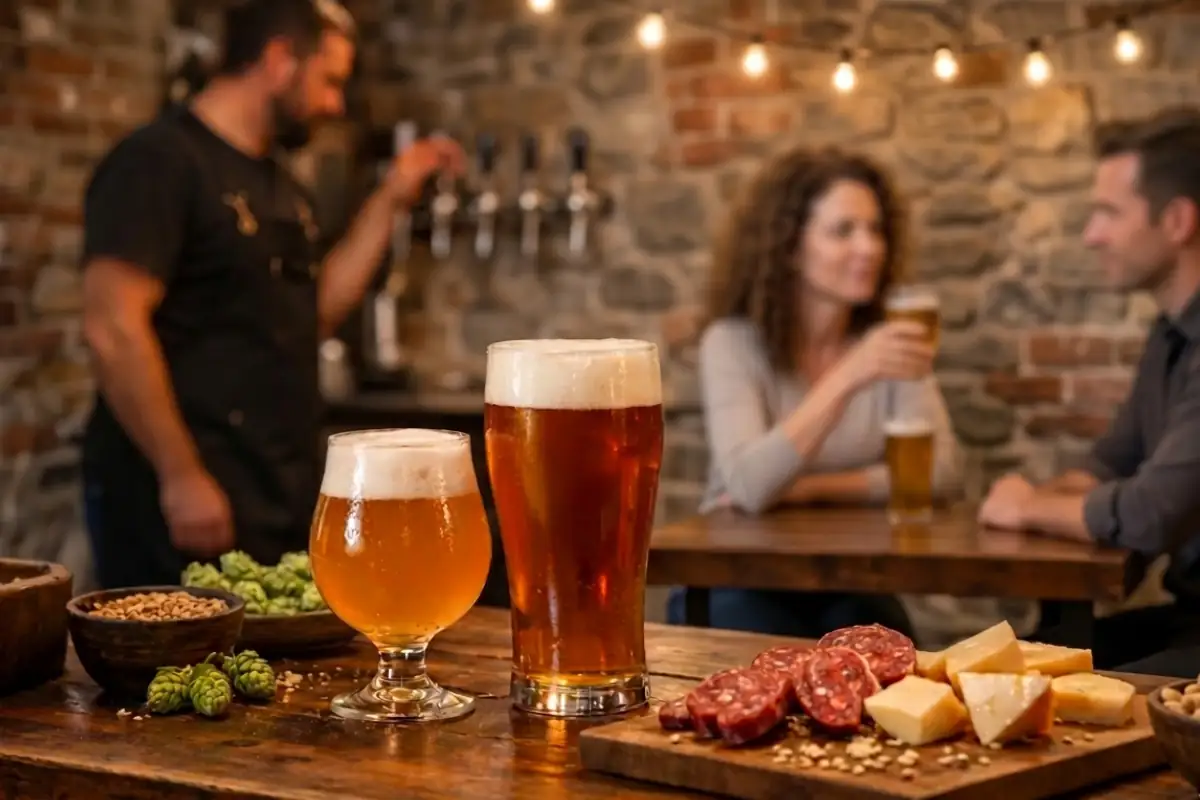
A citrus-forward IPA cuts through the richness of cured meats and hard cheeses beautifully. A stout alongside a dark chocolate dessert is a combination that surprises even confirmed wine drinkers. A light wheat beer, fresh and slightly hazy, works perfectly with seafood or a summer salad.
The rule is simple: the more intense the food, the more structured the beer should be. Start with what you’re eating and let that guide the choice.
Where to drink craft beer in Italy: taprooms, pubs and the right starting point
Taprooms and beer bars: where to experience craft beer live
The best way to understand a beer is to drink it where it was born.
A taproom is the brewery’s own tasting space, often run by the people who made the beer. In Friuli, Wild Raccoon Taproom in Udine is one of those places that stays with you: informal atmosphere, taps that change regularly, and the clear sense that the people behind it know exactly what they’re doing. The taproom at Garlatti Costa in Forgaria nel Friuli is a different kind of experience, more immersed in the landscape, with guided tastings and a very welcoming outdoor space. And then there’s Birrò in San Lorenzo di Sedegliano: small, family-run, with a tasting space built with their own hands and boards of cured meats and cheeses sourced from neighbouring farms. Three places, three different ways to experience Friulian craft beer.
In Veneto, Lucky Brew is a reliable reference point for exploring the local scene: a good selection, a welcoming atmosphere, and the kind of place where you end up staying much longer than planned.
For anyone not yet planning a brewery tour, a specialist craft beer pub is the right place to start. Finding one in your city is often the first step, and the one that turns a curious drinker into a genuine fan.
Supporting small producers: lower taxes for independent breweries
It is worth knowing: the fabric of Italian craft beer is made mostly of small operations. 82% of these businesses have at most five employees, and over half, 51%, are sole proprietorships: often one or two people doing everything, from the brew to the tap. To support those who work this way, thanks to Unionbirrai’s efforts, breweries producing up to 10,000 hectoliters have won a permanent 50% cut in excise duties. A concrete lever for the survival of the smallest producers, the ones who brew with care and often make the most interesting beers. When you buy a beer from an independent brewery, you are also supporting someone who chose to do things differently.
Common questions about craft beer in Italy
How many craft breweries are there in Italy?
In 2022 there were 1,326 businesses producing beer in Italy, according to the Unionbirrai/OBiArt Report: a 104% increase over 2015, growth that did not stop even during the pandemic. Of these, 290 are agricultural breweries, 22% of the total. It is a sector built mostly of small operations, where 82% of businesses have at most five employees.
What do you pair craft beer with?
It depends on the style, and that is where the fun begins. A bitter IPA stands up to cured meats and blue cheeses, because the bitterness balances the fat. A dark stout is right at home with braised meats, aged cheeses, and even dark chocolate. Sours and wheat beers, fresher, are perfect in summer with grilled fish and light fried food. In Italy, the land of pairings, beer has every right to sit at the table next to wine.
What is a taproom and why is it worth visiting?
A taproom is the bar opened directly inside the brewery, where you drink the beer in the exact place it is made. It is not a tourist stop: it is a conversation over a glass, often with the person who brewed it. It is the most direct way to understand what you are drinking, and almost always the thing that turns a curious newcomer into an enthusiast. If you have a brewery near home, that is where to start.
Where do you want to start?
Craft beer in Italy isn’t a trend. It’s a mature industry, rooted in the land, with real stories behind every label. And with a scene focused on quality more than volume, there’s never been a better time to explore it.
Pick a region. Find a brewery nearby. Walk into a taproom and ask what’s on tap, without worrying about sounding like an expert. Nobody was, at the beginning.
Which beer do you want to begin with? Our map has only just been imagined, and we are tracing the first paths these very weeks. Come back often to discover the new stops we add to our journey among Italy’s breweries.
In the meantime, follow our first tastings here on the blog. The journey through Italian craft beers has only just begun.
Cheers!
Before you go, the takeaways:
- Italian craft beer today: 1,326 breweries and a sector betting everything on quality
- What to drink: the trends of the moment, from Italian Pilsner to low-alcohol beers (NoLo)
- The map of the breweries: a journey from the north to the south of Italy
- Practical advice on styles and pairings, so you can order at the counter without stress