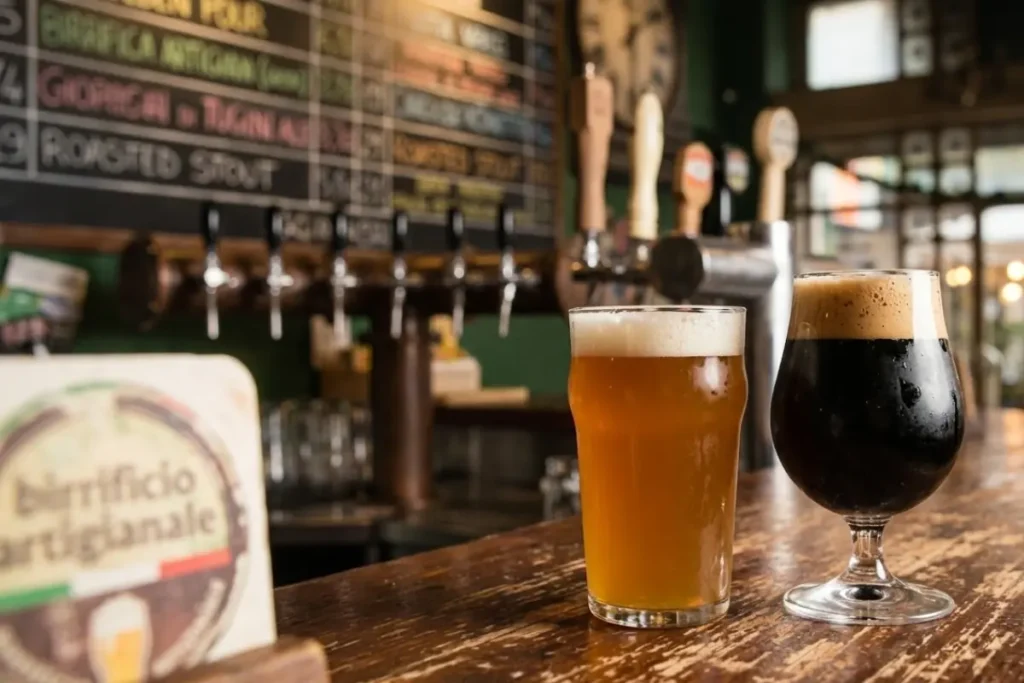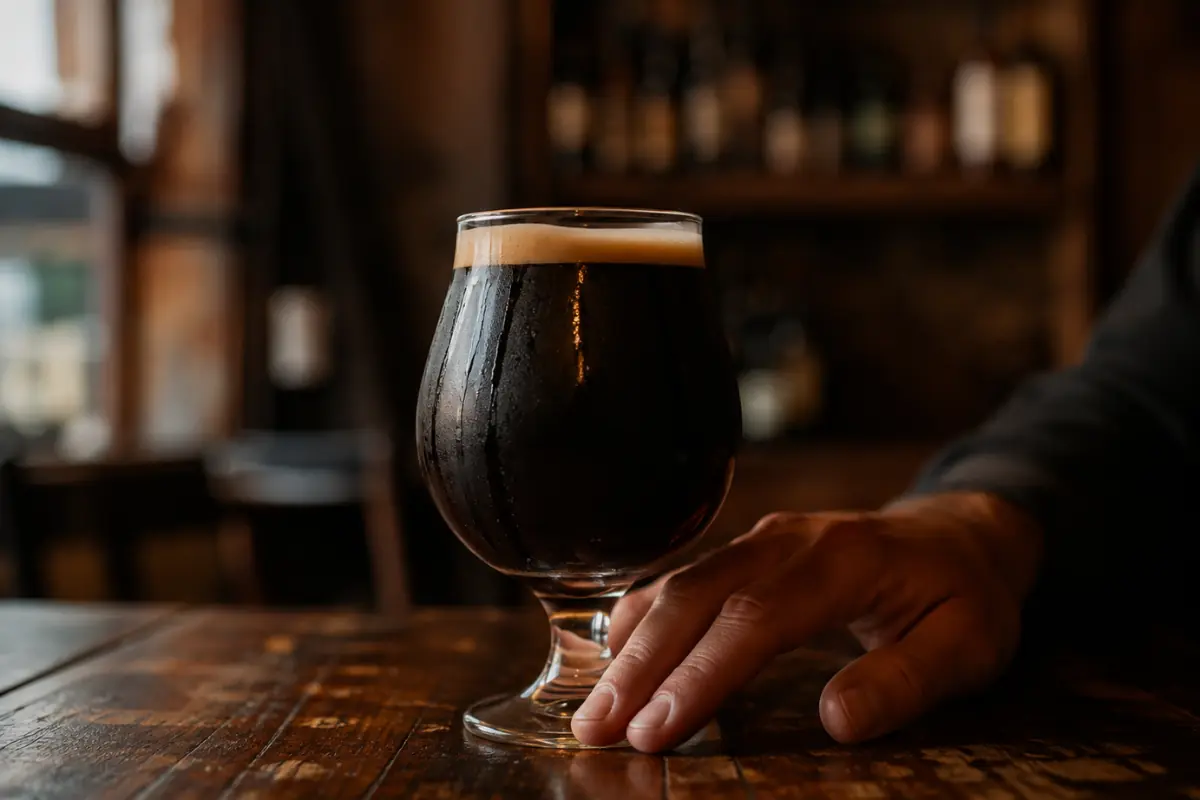
Take a stout out of the fridge, pour it at 4 °C and taste it. You get bitterness, something dry, a hint of roast. Now leave the glass on the table, wait forty minutes and taste it again. Same beer, same glass: now there is dark chocolate, coffee, a roundness that was not there before.
It is not magic. It is the serving temperature finally letting the beer say what it has to say.
We say this a lot to people just getting into craft beer: before the style, before the alcohol content, before the brewery, there is one thing that changes everything and costs nothing. Craft beer serving temperature.
Below you will find the ranges style by style, how to use the fridge you already have, what changes in an Italian summer, and a small experiment to try tonight.
Contents
Why temperature changes what you taste
The mechanism is simple. Aroma molecules move less when they are cold, so your nose picks up less of them. An IPA served ice cold tastes almost flat: you get the bitterness and not much else.
Give it a few degrees and the aromas open up, perceived sweetness rises, and the whole balance shifts. One thing worth being clear about: the bitterness in the beer does not actually change, what changes is how much weight it carries against everything else. The IBU number printed on the label measures the bitter compounds present in the beer, not how bitter it tastes once it is in your glass.
This is not a flaw, it depends on the style. A light lager at 4 °C is crisp and balanced. That same lager at 14 °C goes flat and cloying. But a Belgian tripel at 4 °C loses almost all of its complexity. Cold is not the enemy, it is a tool: using it well means understanding what is in front of you.
Carbonation, the dissolved CO2 that gives beer its fizz, also responds to temperature. The warmer the beer, the more easily it escapes: more foam when you pour, but also a beer that goes flat faster in the glass.
The ranges, style by style, from 4 to 16 °C
| Style | Serving temperature |
|---|---|
| Lager, Pils | 4 to 6 °C |
| Weizen, wheat beers | 6 to 8 °C |
| APA | 8 to 10 °C |
| NEIPA, Hazy IPA | 8 to 10 °C |
| IPA | 8 to 12 °C |
| Saison, English Pale Ale | 10 to 12 °C |
| Stout | 10 to 14 °C |
| Imperial Stout | 12 to 14 °C |
| Tripel, Belgian Strong Ale | 13 to 16 °C |
Light and refreshing beers: 4 to 8 °C
Lagers and pilsners are at their best between 4 and 6 °C. Freshness, a dry finish, lively carbonation: these are beers built for cold, and cold flatters them. Drink them promptly, do not leave them sitting in the glass.
Weizen, the German wheat beers made with yeasts that throw off banana and clove notes, prefer a few degrees more. Between 6 and 8 °C the fruity side comes forward without taking over.
The practical rule is simple: if the beer is pale, light and not very hoppy, stay under 8 °C and you will not go wrong.
Hoppy and aromatic beers: 8 to 12 °C
IPAs, or India Pale Ales, are built on a heavy dose of hops with citrus, resin or tropical fruit aromas. They are at their best between 8 and 12 °C. Below that, bitterness buries everything else. Above it, they start tasting boozy and out of balance.
NEIPAs, also called hazy IPAs, are the cloudy, softer versions with a fruity profile and less perceived bitterness. They sit well between 8 and 10 °C, just enough to let the fresh hop character through.
American pale ales, or APAs, are the lighter, more sessionable cousins of the IPA. They land around 8 to 10 °C, where the hop aroma is still expressive but the malt keeps everything in balance.
Saisons, the dry and lightly spiced Belgian farmhouse beers, and English pale ales find their balance between 10 and 12 °C. Cold enough to be refreshing, warm enough to show what they have.
One warning that matters especially here in Italy: “room temperature” in a bar without air conditioning in August can mean 28 or 30 °C, which has nothing to do with the 12 °C cellar temperature the phrase originally described.
Dark, complex and strong beers: 10 to 16 °C
Stouts, the dark roasted beers with coffee and chocolate notes, should be served between 10 and 14 °C. Imperial stouts, the denser and stronger version, are perfectly happy at 14 °C. Cold shuts them down almost completely.
Belgian tripels, pale high-alcohol beers with spicy and fruity aromas that come from the yeast, and Belgian strong ales give their best between 13 and 16 °C. Serving them ice cold is close to a waste.
For all of these the advice is the same: if the bottle is in the fridge at 4 °C, take it out twenty or thirty minutes before you open it. The exact time depends on the bottle size and how warm your kitchen is, but half an hour already makes a difference you can taste.
How to organise your home fridge
Your fridge is not the same temperature throughout, and for once that is good news. The bottom shelf, above the vegetable drawer, is the coldest spot. The door is the warmest. The middle shelves sit in between.
Set the fridge to around 4 °C and use the zones deliberately: lagers and pilsners at the bottom, IPAs and pale ales on the middle shelves, stouts and tripels in the door or on the top shelf. In summer it is worth dropping it a degree or two, because the heat that gets in every time you open the door pushes everything upward.
Two details that matter over time:
Store bottles upright, especially bottle-conditioned ones, meaning beers carbonated naturally by a second fermentation in the bottle, which leave a yeast sediment at the bottom you do not want to disturb. For everything else, upright is still the better option.
Keep beer in the dark. Ultraviolet light, even indirect light from a window, breaks down hop compounds and creates that unpleasant skunky smell brewers call lightstruck. Dark glass helps, but it does not fully protect.
Summer heat, temperature swings, and the trip home from the brewery
Heat is not the only problem: the repeated swings between cold and warm matter too. Every swing encourages oxidation, the process behind wet cardboard and stewed apple flavours, and puts the carbonation under strain. A beer that has gone from fridge to table and back three times is not the beer that left the brewery.
So when you buy directly at a brewery or at a summer market, get the bottles cool as soon as you can. A cool bag with a couple of ice packs in the car makes a real difference and costs almost nothing.
Above all, do not leave beer in a parked car in the sun. The inside of a car in full sun can go past 50 °C, and a few hours is enough to permanently ruin an IPA you just paid good money for.
The hoppiest beers suffer first. IPAs and pale ales carry volatile aromas that heat strips away quickly. Very malty, high-alcohol beers like barleywines and imperial stouts age better, but they still do not survive extreme heat. Treat them the way you would treat a decent bottle of wine.
Storage: how long does an IPA actually last
Cold does not improve beer, but it does extend its life. An IPA kept refrigerated the whole time holds its aromas for two or three months. The same beer left on a shelf at room temperature can lose most of its hop aroma within a few weeks, well before the date printed on the label.
This is why hoppy beers should be drunk early, within two or three months of packaging, even when the best-before date is further out. Hop aroma is volatile and leaves on its own schedule, regardless of what the label says.
Sour beers, fermented with bacteria that produce natural acidity, are the exception: they can evolve pleasantly over time if you keep them cool and dark.
Then there is the cold chain, the unbroken sequence of refrigerated storage that runs from the brewery’s cold room through transport and warehousing to your fridge. For small breweries that continuity is not always guaranteed, and it is usually not their fault: it depends on everyone who handles the beer along the way.
When you buy directly at a brewery or in a specialist beer shop, asking whether the beer has been kept cold is a perfectly normal question, not a fussy one. And if you spot a craft IPA sitting proudly on a warm supermarket shelf in the middle of August, assume it has already lost a good part of what you would have been buying it for.
Common questions about beer serving temperature
Should craft beer be served at room temperature?
No, and this is a common misunderstanding. When people say “room temperature” for beer, they mean cellar temperature, around 12 to 14 °C, not the 26 °C of an Italian kitchen in August. Even the biggest, strongest beers rarely go above 16 °C.
Can I put a beer back in the fridge after it has warmed up?
Yes, and for a bottle you are going to drink soon nothing bad will happen. The problem is repetition: every warm-cold cycle speeds up oxidation. The practical rule is to take out only what you actually plan to open.
Do I need a dedicated beer fridge?
Not at all. A normal fridge, used with its natural temperature zones in mind, is more than enough. If you collect a lot of dark or high-alcohol beers, a wine cooler set to 10 or 12 °C is convenient, but it is a luxury rather than a necessity.
Try it tonight
To recap: under 8 °C for light and refreshing beers, 8 to 12 °C for hoppy and aromatic ones, 10 to 16 °C for dark, complex and strong ones. These are not rules to follow with a thermometer in hand, they are a starting point.
Here is the experiment: take a stout out of the fridge, pour half of it straight away and leave the other half in the glass for twenty minutes. Then decide which one you prefer. It is the simplest way we know to respect the work of the person who brewed it. If you try it, let us know.
Before you go, the takeaways:
- Cold is not the enemy, it is a tool: under 8 °C for light pale beers, 8 to 12 °C for hoppy ones, 10 to 16 °C for dark and strong ones
- Twenty or thirty minutes out of the fridge is enough to transform a stout or a tripel
- Your fridge already has three different temperature zones: use them instead of fighting them
- In summer the real enemy is not just heat, it is the constant swing between cold and warm
- Hoppy beers should be drunk early, within two or three months, whatever the label says