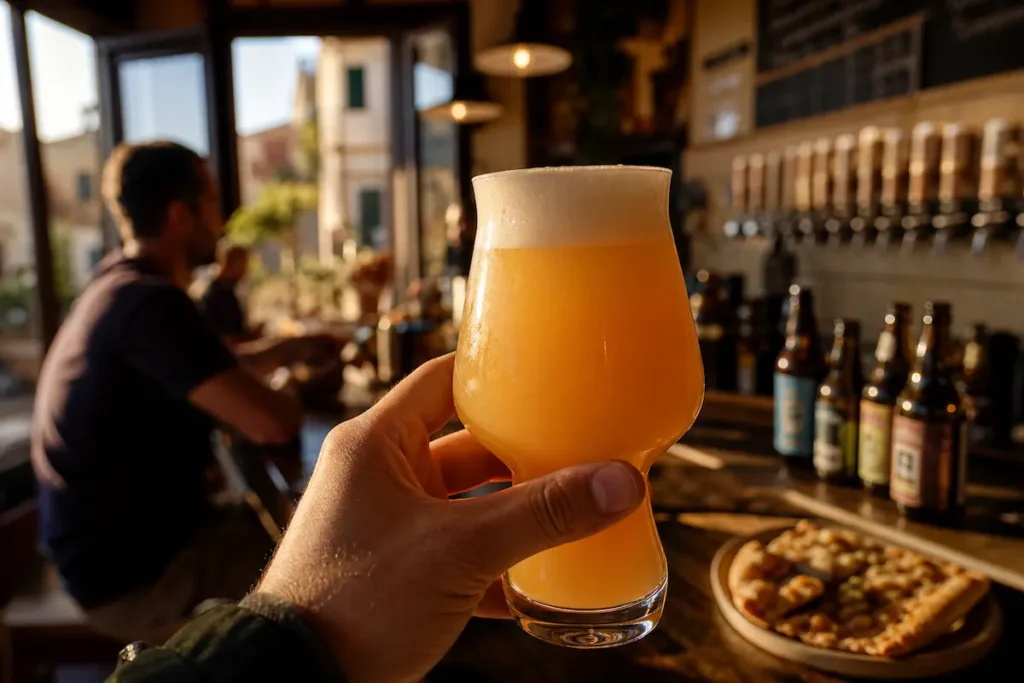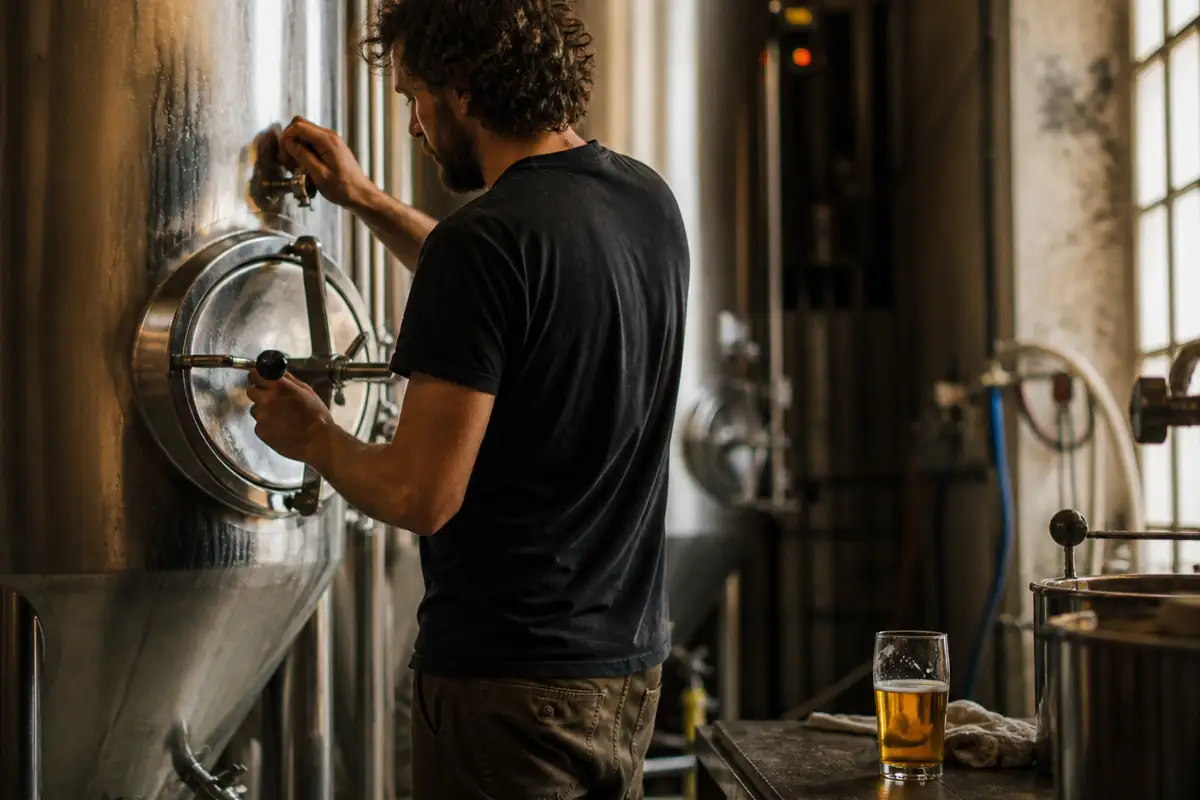
We live in Friuli Venezia Giulia, and one of the first things that surprised us when we moved here was this: craft beer wasn’t a novelty to anyone. It didn’t need explaining. It was already part of the landscape, with a history behind it that most Italian regions simply don’t have.
This post is our starting point for telling the story of Friuli’s brewing scene. Not an exhaustive list, but a way in. The places we know, the beers we’ve tasted, and enough context to understand why this corner of northeastern Italy is one of the most interesting craft beer destinations in the country.
Contents
Friuli: a border region with beer in its DNA
Friuli Venezia Giulia shares borders with Slovenia and Austria. That’s not just geography: for centuries, Habsburg rule shaped the habits, architecture, and food culture of this region. Beer was part of that world long before the international craft wave of the 2000s.
In brewing terms, this Central European heritage translates into a historical preference for lagers, bottom-fermented beers that are clean, crisp, and easy to drink. It also means a genuine attention to ingredients: many producers in the region work with local spring water and regional raw materials, a care that runs deep and comes from a long way back.
It was in Udine, in 1859, that Luigi Moretti founded his brewery and ice factory, laying the foundations for what would eventually become Birra Moretti, the brand most Italians know well. The craft breweries that came much later are telling a very different story, but they’re building on the same soil.
How the modern scene in Friuli was born
The first Friulian craft breweries appeared in the late 1990s, back when craft beer in Italy was still a foreign concept. Antikorpo Brewing in Trieste in 1999, Zahre Beer in Sauris around 1999-2000, Praforte in 2000: these weren’t just for fun. They were responses from a region that already had an instinct for quality beer.
A craft brewery, for anyone new to the term, is a small-scale producer that develops its own recipes, selects its own ingredients, and operates outside the logic of mass production.
The next decade brought a second wave, with a sharper sense of identity. The new producers didn’t just want to make good beer—they wanted to make beer that tasted like home. Local ingredients, regional raw materials, a genuine conversation with the land. Gjulia, in San Pietro al Natisone, grows its own barley and malts it on site. Zago carries the same philosophy forward with great consistency. It’s this kind of approach that turns a bottle into a story about a specific place.
The styles that define the region Friuli Venezia Giulia
Zahre Beer’s smoked beer is probably the most iconic label on the local scene. Simply called Affumicata, it’s a Rauch-style lager: a bottom-fermented beer brewed with smoked malt, a tradition rooted in German brewing. It pours amber-dark, and the aroma brings together charred wood, toasted malt, and a hint of red currant. On the palate it’s round, with a fine, creamy carbonation. It’s not an easy beer on first sip, but if you let it settle, it tells you everything about Sauris: the “prosciutto crudo”, the mountains, the smoke from winter fireplaces. Pair it with a slow-braised meat dish and it all makes sense.
Another window into the territory is Gjulia’s Ribò, brewed with must from Ribolla Gialla grapes grown at the Altùris estate. Ribolla Gialla is a native grape variety from Friuli, cultivated on the hills of Collio and Colli Orientali. Adding it to beer is a deliberate act of place-making. The result is an agricultural ale with unexpected complexity: fruity, slightly wine-like, with the Ribolla Gialla genuinely present, not as a hint but as a real character. One of those beers that stays with you.
Beyond these more original styles, Friuli’s breweries produce excellent versions of classic formats. A Pale Ale is a top-fermented, moderately hoppy beer. An IPA, or India Pale Ale, pushes the hops further, with intense bitterness and aromas ranging from citrus to tropical fruit. A Blanche is a wheat beer: light, hazy, refreshing. Friuli hasn’t invented new categories, but it has given existing ones a very specific sense of place.
The breweries we know: what to order and why to go
These are the places we know directly, because that’s where recommendations worth reading actually come from.
We first encountered Birra di Meni at the Fiera Primaverile degli Uccelli in Sacile, a spring fair held in April, and it was a genuine surprise. The Durgnes, a special lager, is smooth and easy-drinking in the best possible way. The Grava, an IPA, is aromatic and well-balanced, without the aggressive bitterness that can put off first-timers to the style. The brewery is open for visiting by appointment only, which makes it worth planning ahead.
Antica Contea in Gorizia is worth visiting for both the beer and the setup. The taproom is cosy and welcoming, but with one difference from most places: there’s no table service. You walk in, choose what you want, order at the counter, pay, and sit wherever you like. Beer prices are genuinely fair, lower than most. On the beer side: the Gorzer is a Helles, a classic Bavarian-style pale lager, but this one has real character and aroma that lifts it well above the style baseline. The Contessina is a Session IPA at 3.8% ABV, light enough to keep you sharp but full of flavour. The Kidnapped, their Pacific Pale Ale, is the kind of beer you order a second time before finishing the first.
àgro birrificio is a farm brewery in Giais, small but always busy, which says everything you need to know. In summer you can sit outside in a lovely open space. Six beers on tap: Blanche, Lager, Saison, APA, Red Ale, and Stout. We go back mainly for the APA and the Stout, which is seasonal and not always available, but worth checking for. The local charcuterie board is excellent: one of those pairings that doesn’t need planning.
Birrificio Borgo Decimo is the kind of place where you eat and drink well without overthinking it. The pulled pork is something special. The beers are consistently reliable: the Valchiria Helles is very good, and the Rebus and Malasorte are the ones you order when you can’t decide and know you won’t be disappointed. For those who like more structured beers: the Granidoro and the Neris, a Porter with notes of coffee and dark chocolate, are two good reasons to go back.
Birrificio di Naon in Porcia offers guided brewery visits for small groups of up to six people, with a tasting of six beers paired with crostini made with local ingredients. The kind of experience that turns a visit into a memory.
Villa Chazil in Nespoledo has a tasting room with ten different beers and the option to stay for a farm-to-table meal. It’s the kind of place you visit once and find yourself returning to again and again.
We also featured a few other local breweries in an earlier post: Garlatti Costa, Birrò and Luppolo Verde all feature in our article on craft beer in Italy. There are also breweries we want to write about more fully soon: Valscura in Sarone di Caneva, Wild Raccoon in Udine, and Forum Iuli in Cividale del Friuli, a modern and welcoming spot with consistently good beers. We’ll be back.
Common questions about craft beer in Friuli
Why does Friuli Venezia Giulia have such a deep brewing tradition?
For centuries the region was part of the Austro-Hungarian Empire, and that closeness to Austria and Slovenia left a clear mark: a historical preference for lagers, clean and crisp on the palate. It’s no accident that Luigi Moretti founded his brewery in Udine back in 1859, decades before craft beer became a national phenomenon.
What are the most representative beer styles in Friuli?
Zahre Beer’s Affumicata, a Rauch-style lager brewed with smoked malt, is probably the most iconic label in the region. Another good example is Gjulia’s Ribò, an agricultural ale brewed with must from Ribolla Gialla, a native Friulian grape variety. Alongside these original styles, Friuli also produces excellent local takes on Pale Ale, IPA, and Blanche.
Which craft breweries are worth visiting in Friuli Venezia Giulia?
Among the ones we know firsthand, it’s worth calling out Antica Contea in Gorizia, àgro in Giais di Aviano, Borgo Decimo in Azzano Decimo, Birra di Meni in Cavasso Nuovo, and Villa Chazil in Nespoledo. Each one tells the story of the territory in a different way, from Bavarian-style lagers to agricultural beers made with home-grown ingredients.
Friuli’s brewing story is still being written
Friuli Venezia Giulia isn’t a region you scroll through on a list. It’s one you move through slowly, stopping in the right places, asking the brewer what’s fermenting, trying something you haven’t heard of before.
Soon on BeersAndTips.it you’ll find dedicated profiles for individual breweries, with details on how to visit and what to order. Each post will go deeper into what this overview has only sketched: the story of a place, the profile of a beer, the person behind the bar.
Which brewery in Friuli are you most curious about? Let us know: the best tips always come from someone who knows a place we haven’t found yet.
Cheers!
Before you go, the takeaways:
- Friuli Venezia Giulia has one of Italy’s deepest craft beer cultures, rooted in centuries of Central European influence
- The region’s brewing scene started in the late 1990s and has grown into a distinct local identity
- Local styles range from smoked lagers to agricultural ales made with native grape varieties
- We share the breweries we know personally, with honest notes on what to order
- Many breweries offer taproom visits and tastings, often paired with local food